

In one version of the traditional Levantine lullaby “Yalla t-nam Rima”, the narrator – generally understood to be the mother – sings tender, soothing words to her daughter Rima to lull her to sleep. At a certain point, however, she sings of being kidnapped and taken far from her. This story is explicitly cited in birth: pending, a book by Reema Nubani that forms the core of the body of work developed for Plattform26. The artist, who shares her first name with the child of the lullaby, explores the maternal bond as a metaphor for her ambivalent relationship to her homeland, Palestine, torn between permanence and separation.
Currently based in Geneva, Nubani centres her practice on poetic writing, from which sculptures, installations, and paintings emerge. Words become brushes in a form of concrete poetry where symbolism, abstraction, and mythical as well as everyday references articulate the unspeakable, give form to what has been destroyed, and express an emotional and consciously idealistic relationship to home.
Leafing through birth: pending, one encounters a perspective that oscillates between the warm, intimate interior of the maternal belly and the Palestinian landscape, following a familiar parallel – in the words of Fadwa Tuqan, “this land is a woman / in its furrows and wombs” (1). This extended metaphor unfolds through symbolic images, as the foetus is separated from the mother, encounters the cold harshness of the outside world, and ultimately wishes: “leave me to dissolve in my mother’s womb” (2). The narrative evokes a shifting body-landscape, moving from the ideal of a fertile green soil to a terrain that, after the arrival of violence, appears only as grey concrete and ruin.
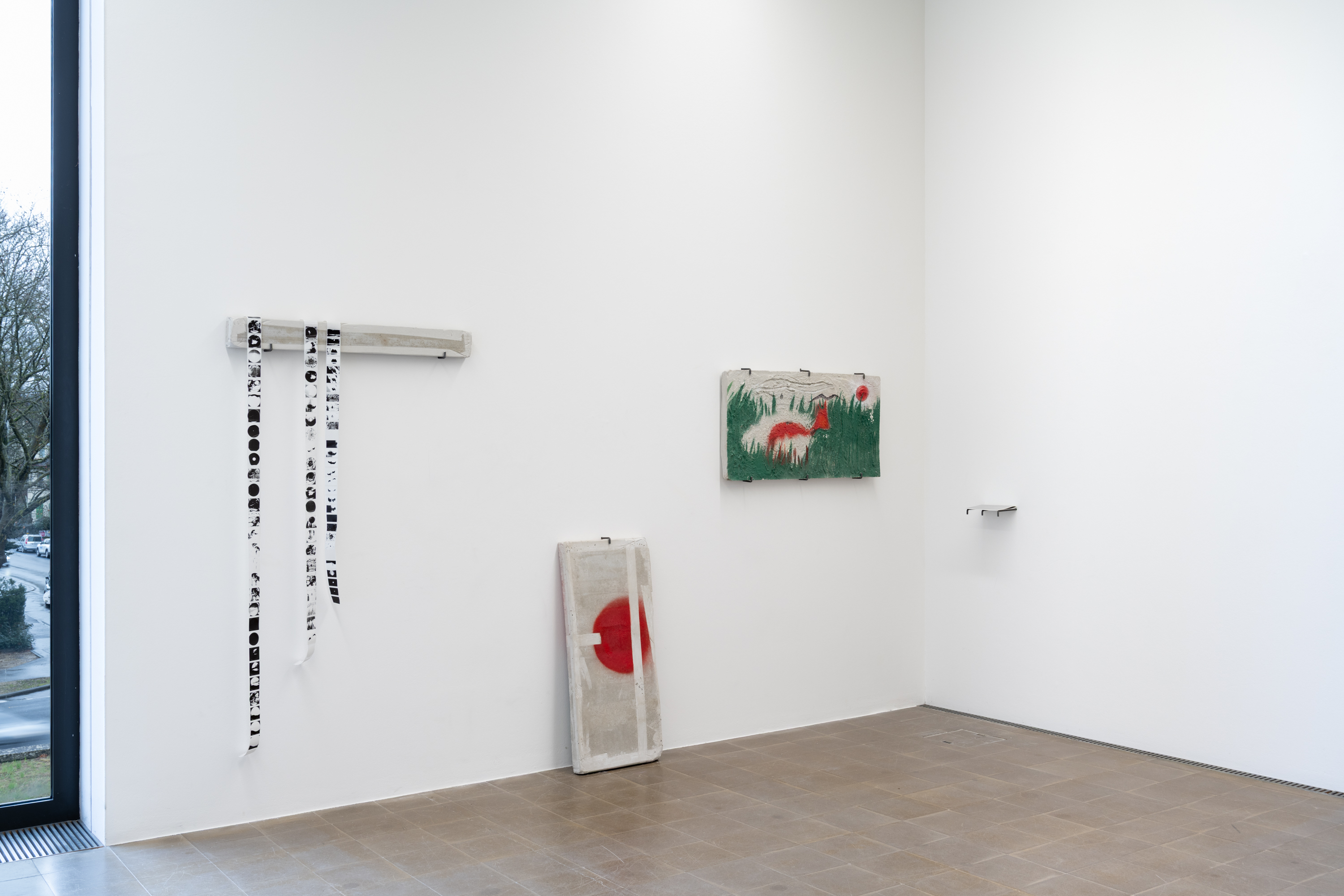
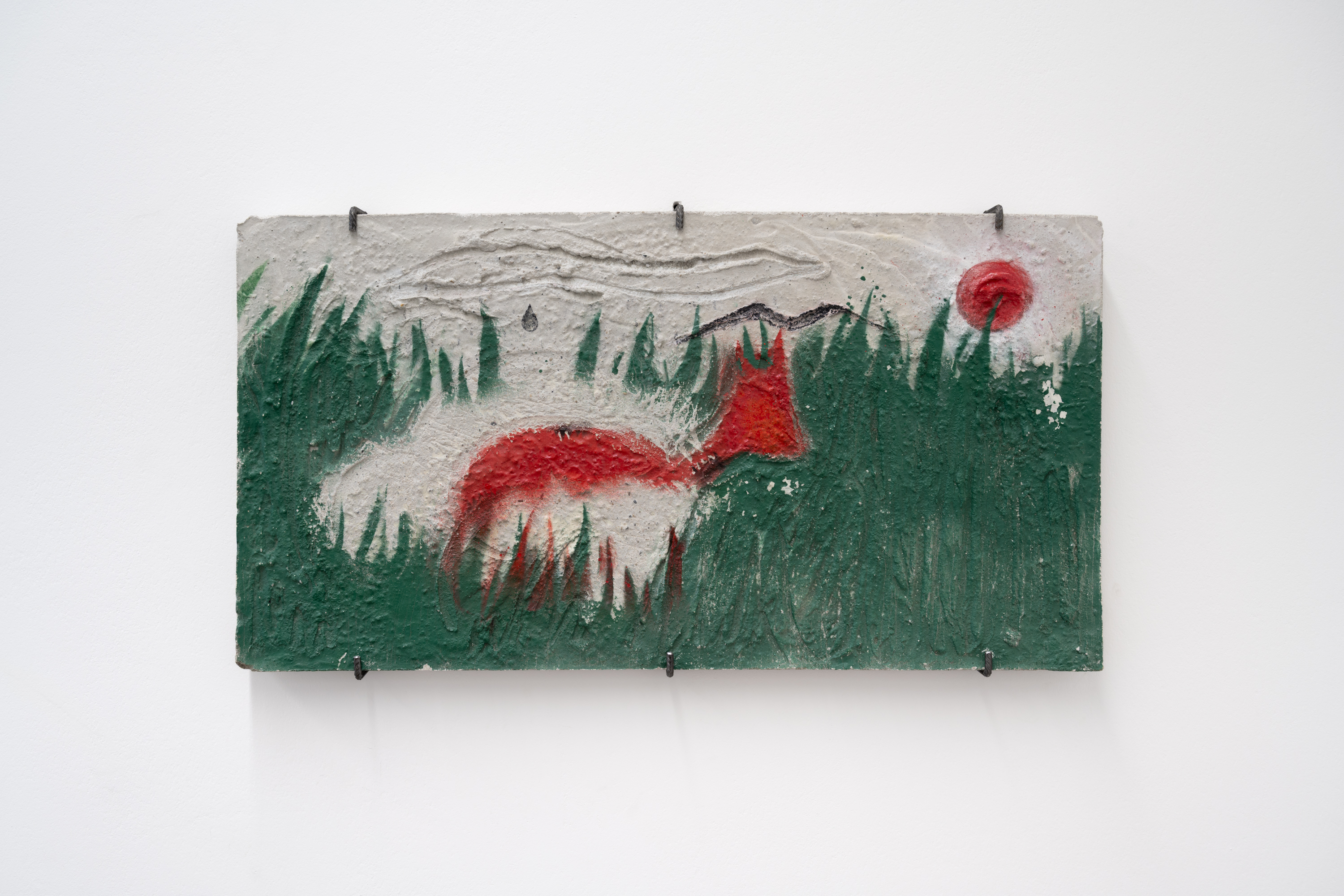
Alongside the book, two cement canvases – shamal (north) and janoub (south) – occupy the exhibition walls, offering interior and exterior views of the same geography and history. One evokes flourishing nature, the other the womb as a sacred, poetic nest. Cement, a recurring motif in Nubani’s work, stands as both the permanent substance that turned green land grey and a symbol of control through walls and checkpoints, embodying a present marked by violence, expropriation and occupation.
As emotional and imaginary landscapes romantically sketch what home might be, concrete returns in the final work in a rectangular panel, surrounded by a garland of images printed on thermal paper and thus destined to disappear over time. The images are variations on the same motif of the womb, evoking ultrasound scans and circular uterine symbols.
The lullaby sung by a maternal, reassuring voice fades across the various iterations of this series of works, as we are confronted with a tragic reality. Through sensory yet piercing poetry, Nubani evokes both resistance and fragility, holding us in an existential and deeply personal rupture between leaving one’s land to survive and staying to resist erasure.
Monica Unser
(Translated from French)
———