

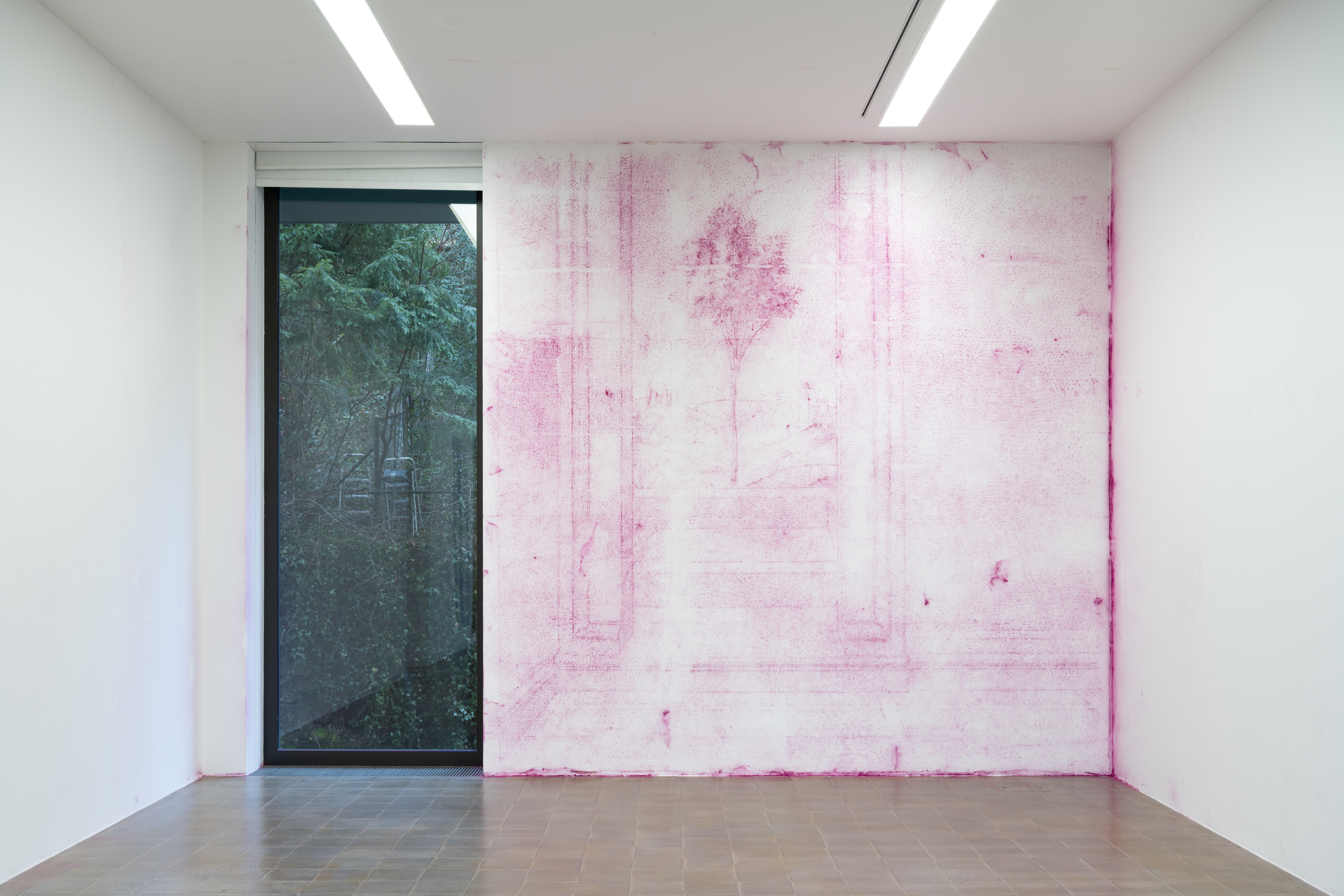
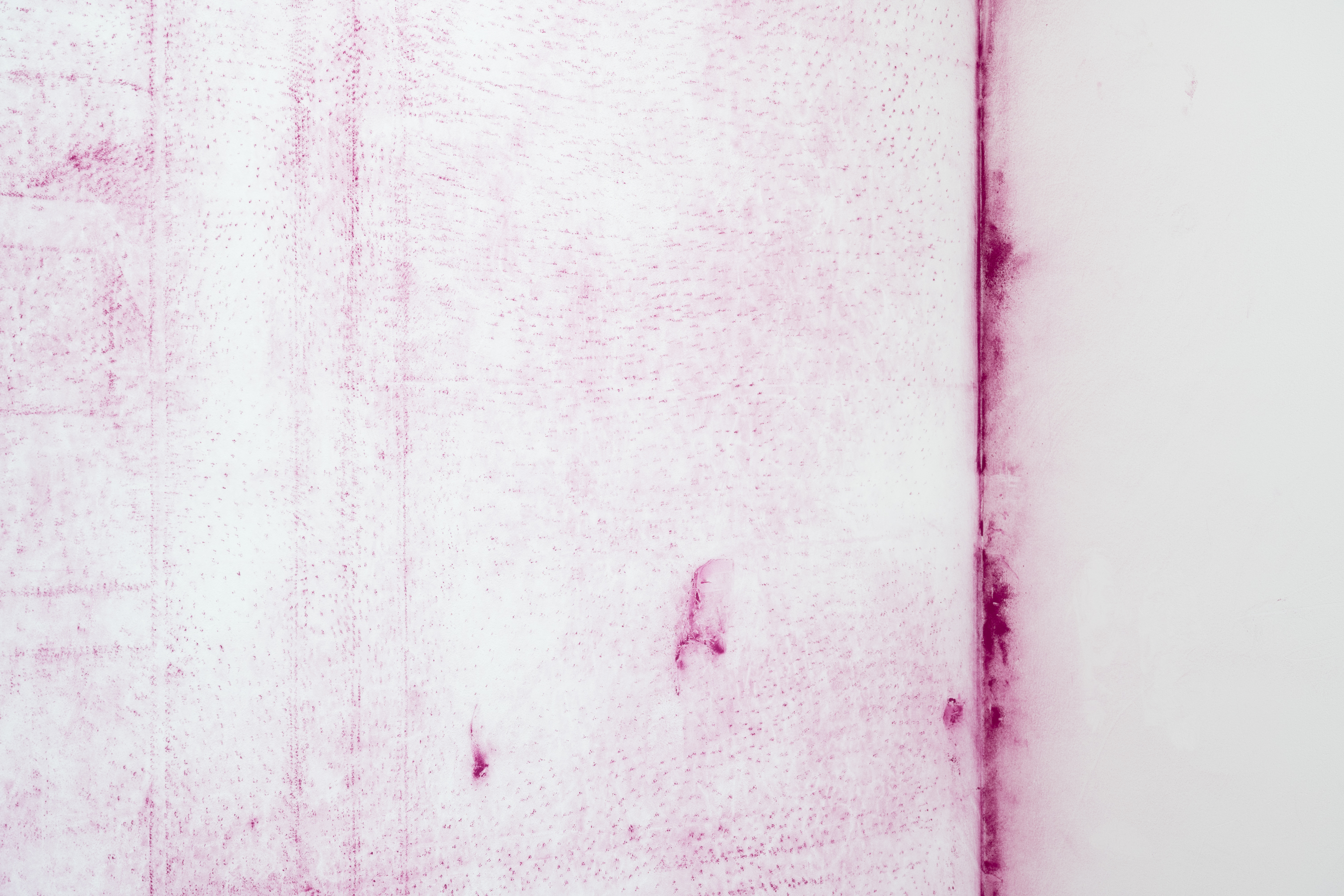
Originally from Milan, Ludovico Orombelli obtained a BFA from Arts University Bournemouth before completing a Master’s degree in Visual Arts at ECAL. For several years, he has been developing a practice deeply informed by historical, iconological and technical research into the imagery of Renaissance humanism. A significant part of his work consists of collecting images, which he assembles in a binder whose organisation is inspired by the plates of the Warburg Institute, a library dedicated to the study of images and their role within cultures and societies.
Since 2024, Orombelli has been developing the project Sinopia. The term sinopia refers both to a pigment and to the preparatory drawings for fresco painting made with it. This project consists of a series of mural “paintings” produced using the technique of pouncing (spolvero) in various art spaces. The spolvero involves transferring a preparatory drawing onto the surface to be painted by passing powder through holes pricked into a sheet of paper using a needle. In doing so, Orombelli reactivates and reinterprets an ancient technique that was never intended to be seen.
At the Kunsthaus Biel Centre d’art Bienne, Orombelli presents a work that continues this series. His working process begins with a careful consideration of the architecture of the site that is to host the work. During his first visit, his attention was drawn to the windows recurring at regular intervals throughout the galleries. As Orombelli explains: “By framing the exterior according to a precise geometry, they suggested a way of looking at the landscape that became the starting point for the project.”.
Once the location had been selected, Orombelli turned to his image collection to identify a work capable of entering into dialogue with the space. In this case, the image that appeared most relevant was Botticelli’s Annunciation (1490), as it presented strong structural similarities with the architecture of the KBCB. According to the artist, the painting “echoes the building by enclosing a landscape within the rational geometry of an architecture, emerging as the ideal work to transfer to the institution and through which to reflect on and question the principles of framing the landscape”.
However, Orombelli’s practice does not merely retrace the ghostly outlines of works by the great Italian masters of the Renaissance. One of the crucial stages of his process involves removing all iconographic elements from the original images, allowing only the structural components to emerge: the elemental geometries of perspectival construction, which now enter into dialogue with the architecture of the space, from one corner of a wall to another.
Confronted with this semi-fictional landscape, the public is invited to move back and forth between the two historical periods evoked by the work, to observe how we relate to space and to the world at large, and to reflect on the origins of our modes of perception.
Katia Leonelli
(Translated from French)