

“Rocks, Caves, Lakes, Fens, Bogs, Dens, and shades of death,
A Universe of death, which God by curse
Created evil, for evil only good,
Where all life dies, death lives, and Nature breeds,
Perverse, all monstrous, all prodigious things …”(1)
What fascinates about ruins is their distance from the present: they point to a life once lived, now accessible only in fragments. In their material absence, memory, loss, and temporal depth condense into form.
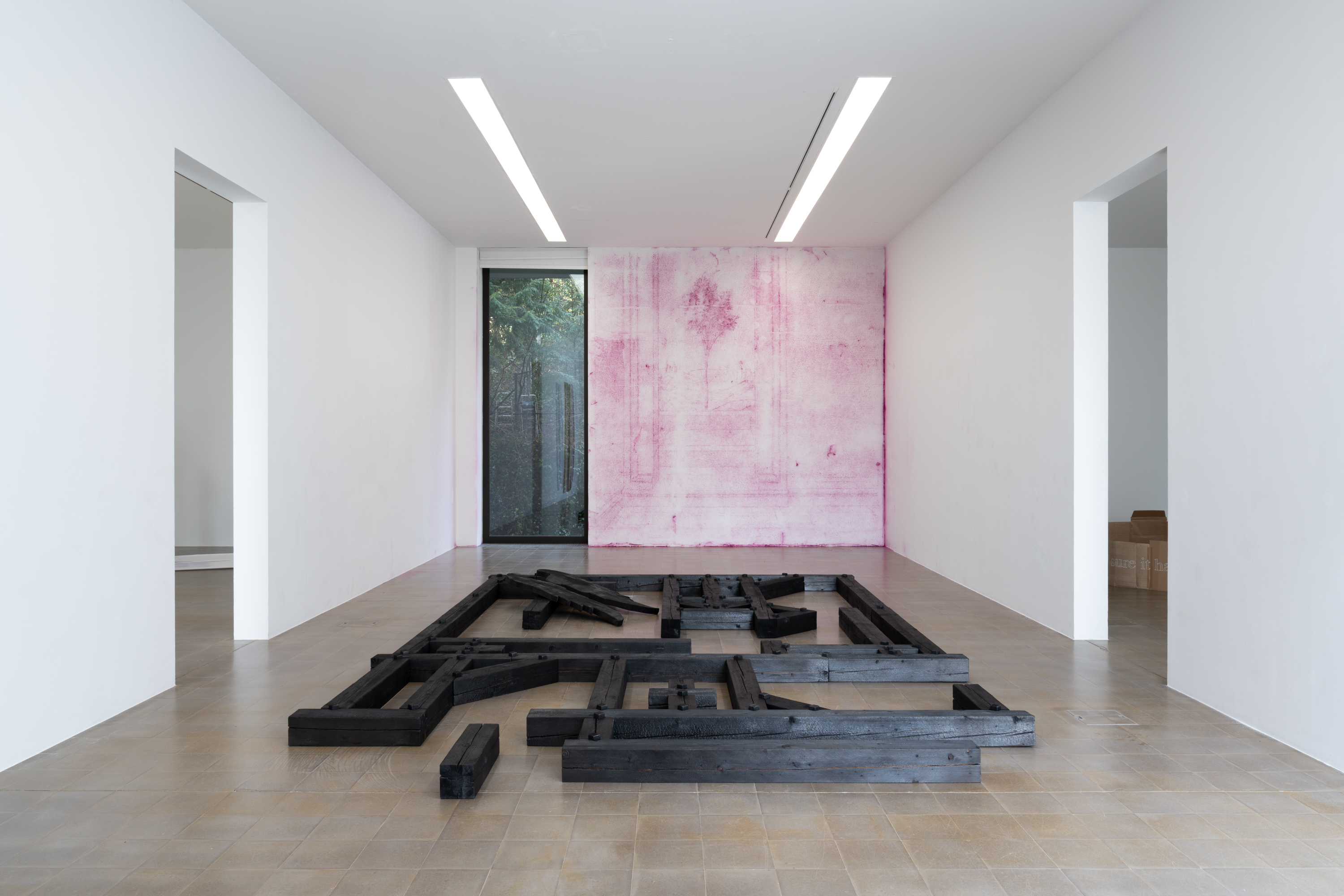
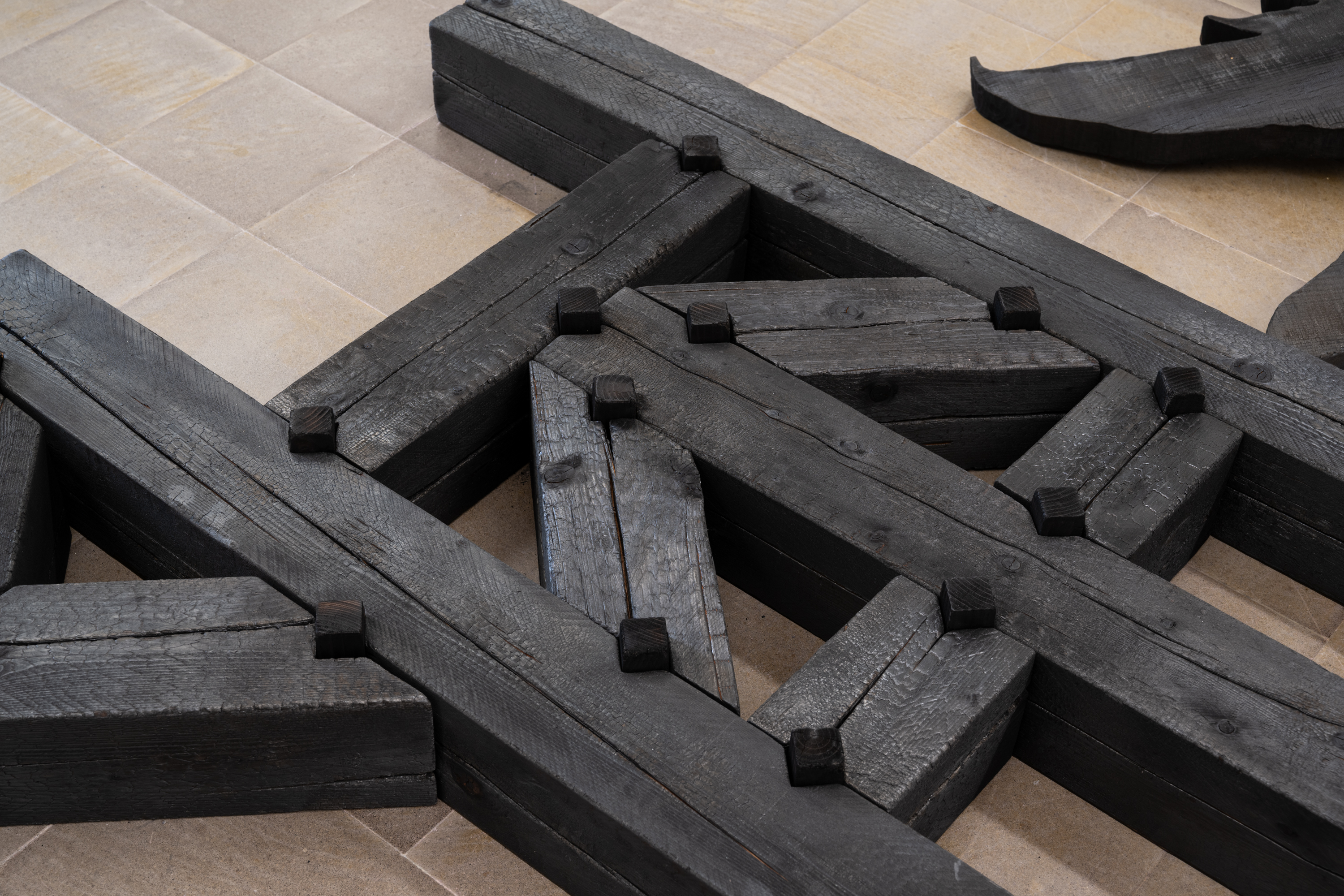
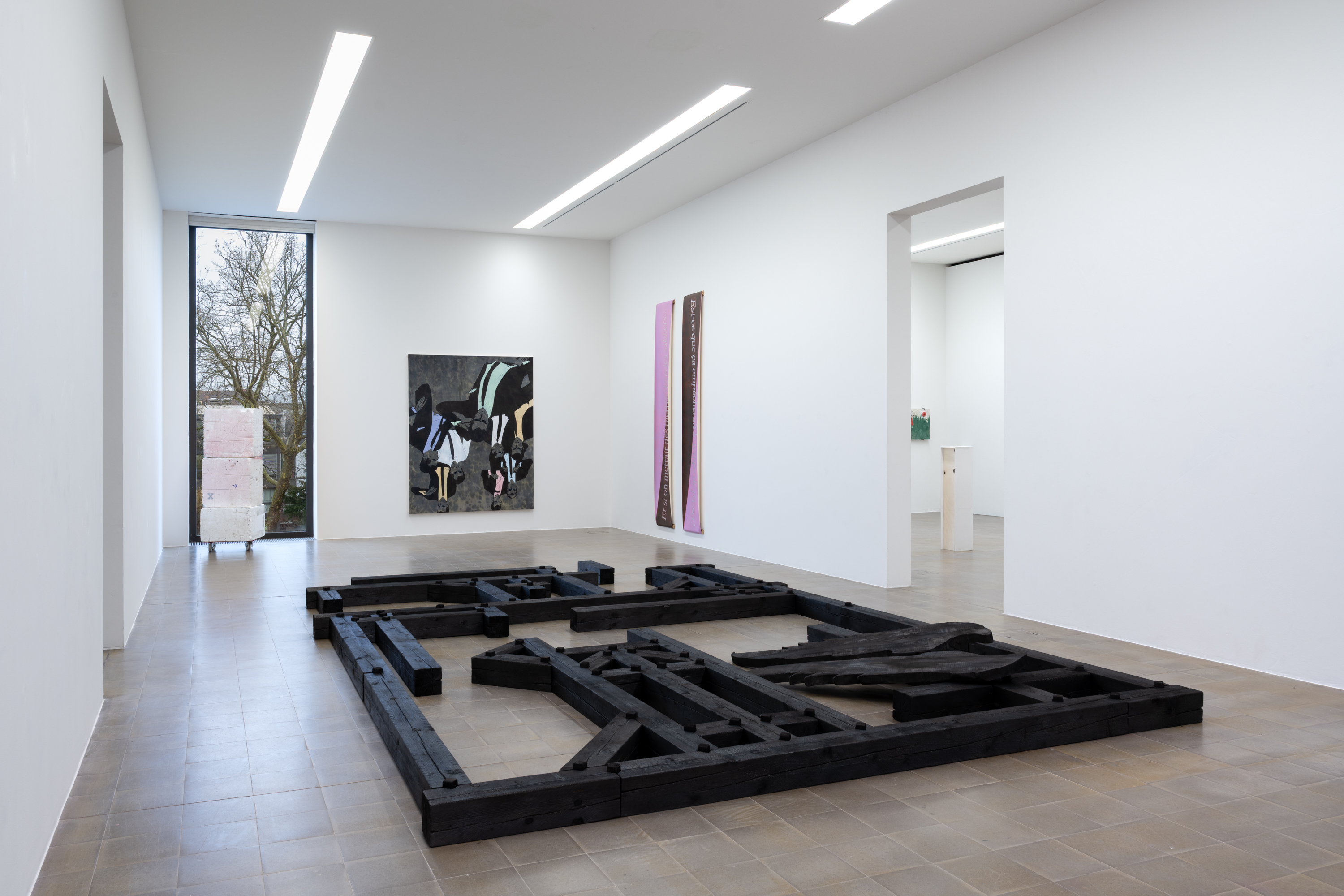
In Lifelover, the rational, geometrically precise construction in charred wood stands in tension with the immaterial history of what was once lived there. What emerges is a spatial outline that bears the imprint of past practices without reproducing them.
The work operates through varying architectural concepts. Place appears as a rational, cartographic order, while space, as Michel de Certeau wrote, only emerges through practice: “Space is a practiced place” (2). Meaning, and therefore sacrality, arise through movement, repetition, ritual, and memory. An apartment becomes existentially structured through everyday devotion, through the arrangement of photographs and objects, through habitual gestures that produce orientation and a sense of coherence.
Presented as an architectural plan, the installation is translating a spatial constellation into a system of lines, measurements, and structures. The burnt floor plan functions as a material residue of a space whose meaning arose from practice and now survives only as fragment. Symbols appear within: crosses and angel wings. While the cross remains legible as an iconographic sign, the wings assert a form of presence that cannot be fully dissolved into symbolism. In Christian tradition, angels mark thresholds between spheres: between order and fall, transcendence and loss. Milton’s Paradise Lost describes a “universe of death,” a state in which movement turns into stasis, in which life perishes and death persists. This notion resonates in Lifelover as atmosphere: as the imagination of a space that has lost its salvific order.
The title, borrowed from the band Lifelover, could be considered reactionary in the context of metal subcultures. Intended as an ironic and self-aware gesture, Lifelover’s music was initially dismissed by critics for being too soft and insufficiently aligned with prevailing genre norms. In Simeon’s case, the title functions as an assertion, while the space itself operates as counter-image. Affirmation of life appears as a semantic claim within a structure of decay: a gesture of vitality inscribed into a landscape of collapse, erosion, and stillness. Space becomes a carrier of an affective state, where vitality persists as concept while materially an aesthetic of breakdown unfolds.
Regarding Milton, everything earthly is subject to change, decay, and temporality. Heaven, by contrast, appears as an atemporal mode of being, a state beyond time, aging, and becoming. Lifelover remains inscribed within the earthly order. The work exposes processes: history, aging, material transformation, the physical condition of wood after burning. Time manifests here as trace, as inscription, as irreversible transformation. In this sense, affirmation of life becomes a positioning within an unavoidable processual logic; an act of semantic resistance inside material entropy.
“All of the roses you planted have lost
Their touch and faded away.” (3)
Eleonora Bitterli
(Translated from German)
———