

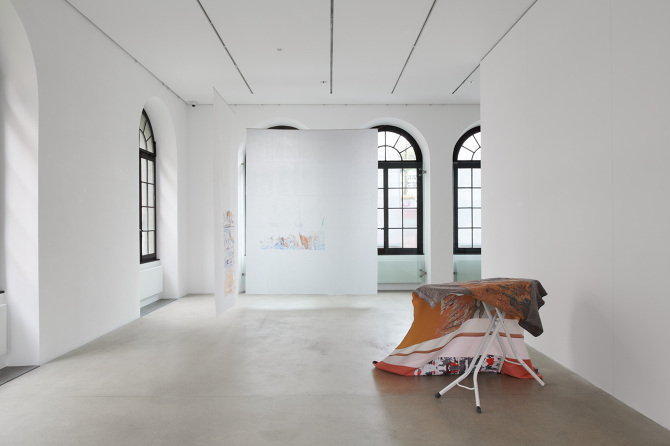
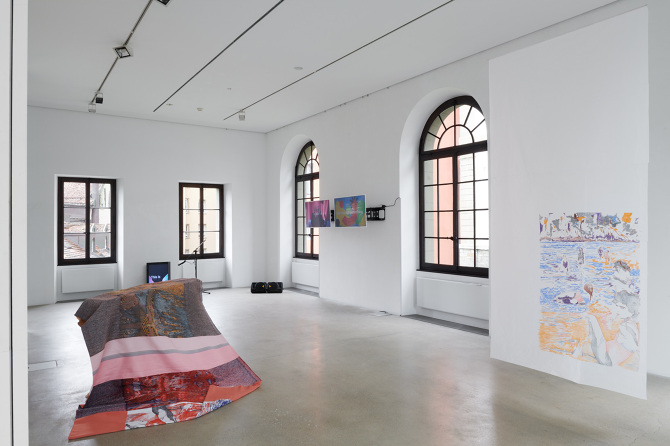
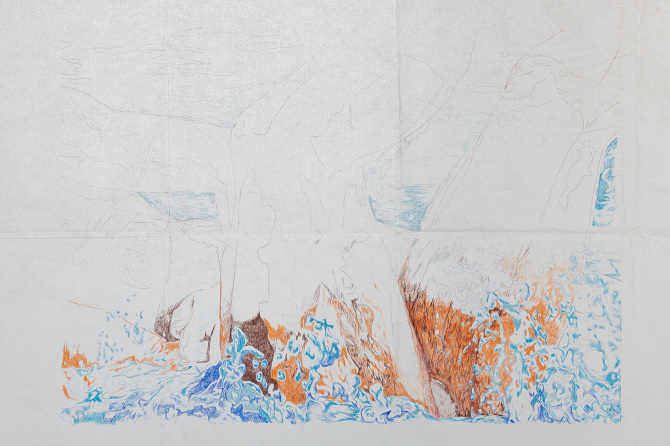
Steam Bath (écran total), 2023
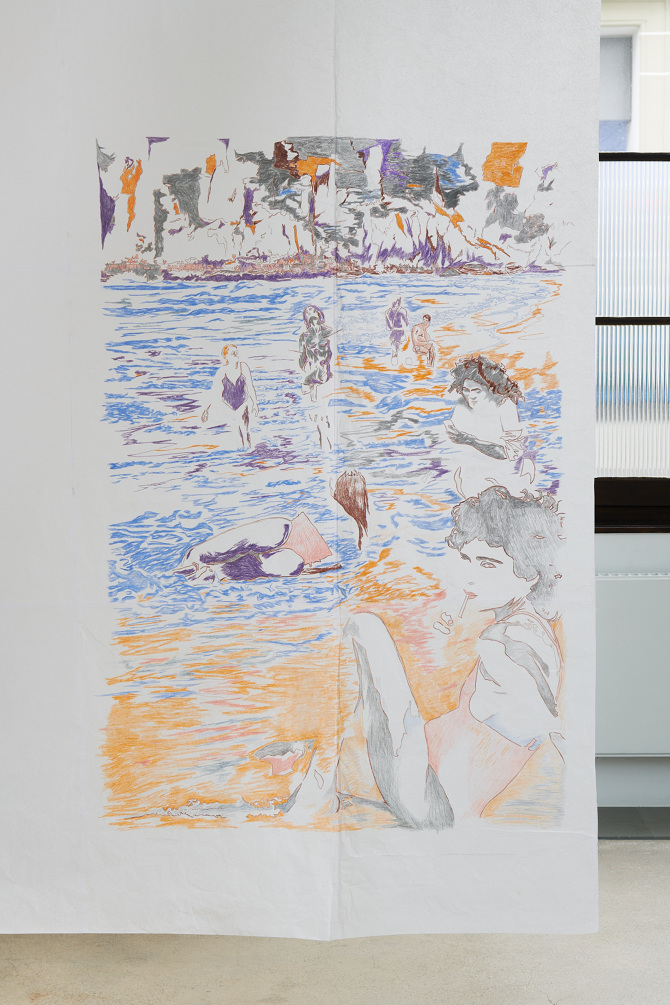
Jean-Marie Fahy's artistic practice is one of weaving. He brings together threads of different materiality and colour to weave them into a common new, making them both more multi-layered and more resilient through the connection. The motif of the figurative compositions of Steam Bath (écran total) are depictions of undressed bodies sunbathing and enjoying themselves on the beach. These meet art-historical figures such as Saint Sebastian, who has been repeatedly associated with homoerotic desire since the classical Renaissance. Instead of striving for spectacularity in the art object or in his own artistic practice, Jean-Marie is interested in the power relations inherent in society's treatment of images and their reproduction. Which bodies and which histories are depicted where and how and thus enter the collective consciousness and historiography? How have (majority-society-accepted) representations of masculinities and especially of the naked male read body changed over time?
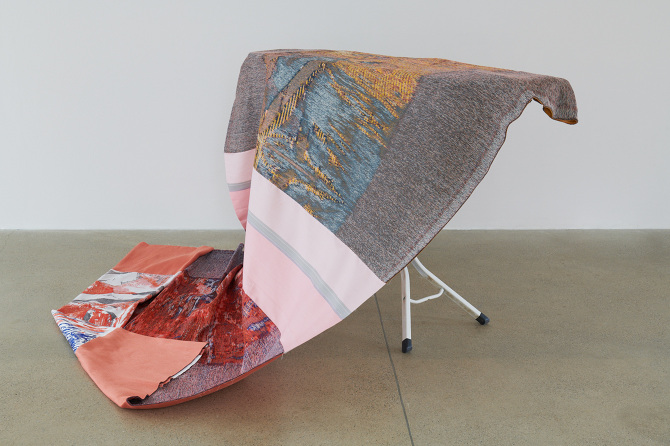
In Steam Bath (écran total), the medium of drawing meets that of jacquard textile weaving, which in turn is activated by a performative intervention on the evening of the exhibition opening. Behind these forms lie not least considerations about the economic status of a work of art and its effects on the materiality of the object. The absolute fragility of the silk paper illustrated as a unique specimen seems to elude mark-oriented reproducibility, whereas the industrially produced textile derived from it can be reproduced without limit. In the case of the jacquard manufacturing process, which was important for the development of industrialisation in Europe, the boundary between the value of the product as an art object or as a pure commodity within a capitalist world market becomes blurred. Similarly, as Jean-Marie seems to point out, the boundaries between imposed market orientation and practices independent of it are becoming increasingly blurred in contemporary art-making as well.
Selma Meuli (translation P23)
Tissue paper, coloured pencil, jacquard, ironing board
Photo credits: Margot Sparkes