

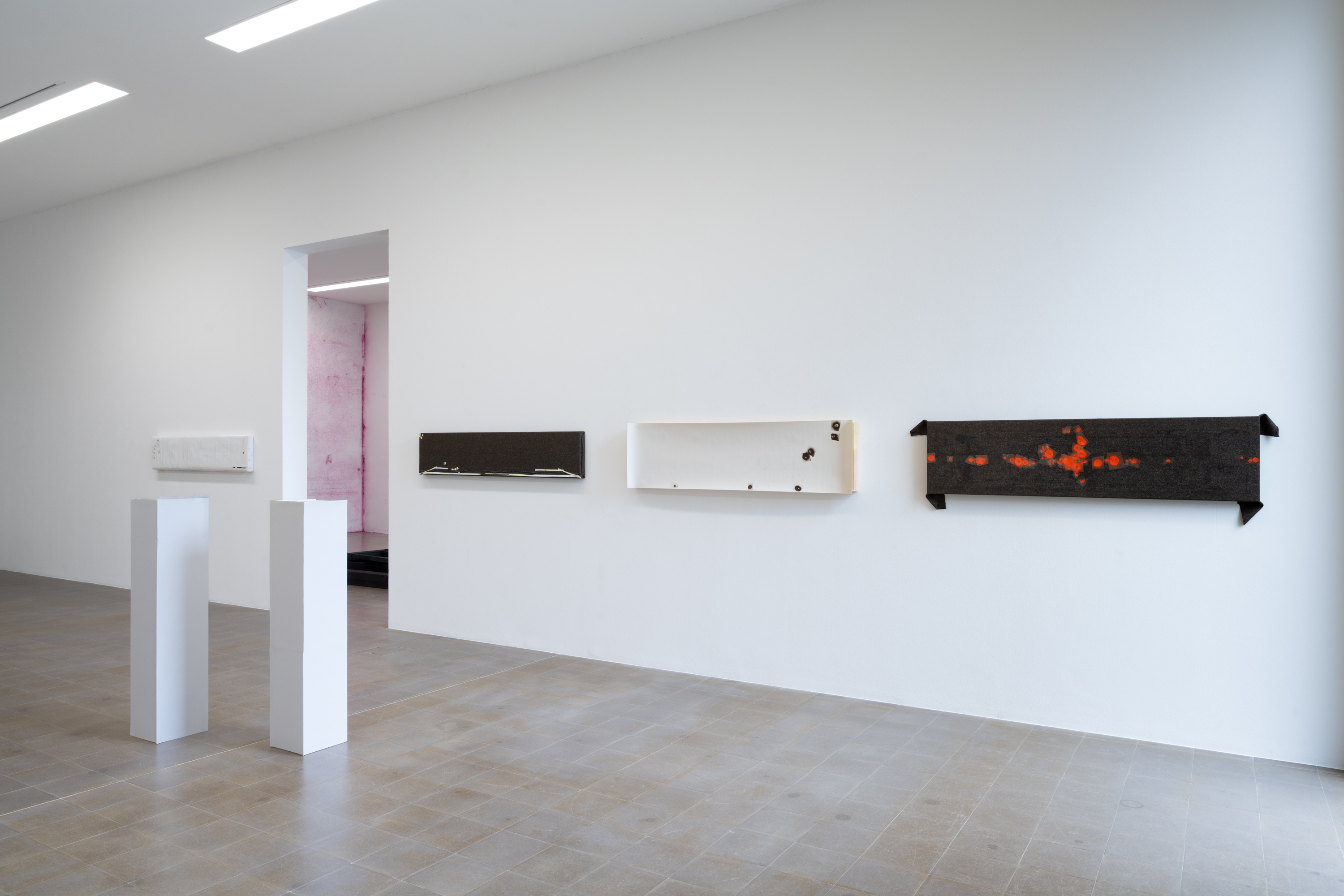
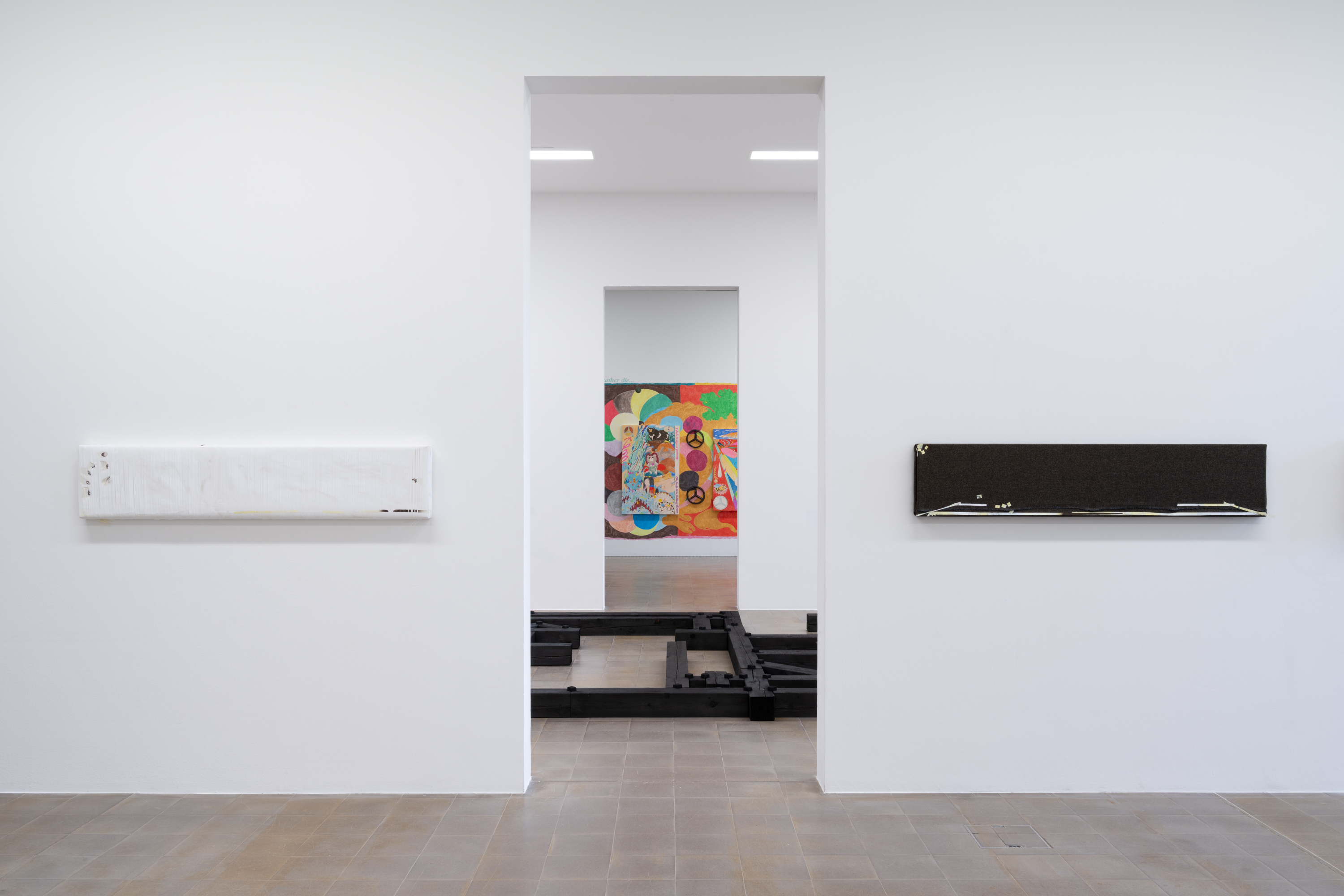
Isabelle Morton’s works sit between painting, sculpture and display. They do not align, nor introduce themselves. They take their time, held in rehearsal. No beginning is erased; no ending is insisted on. 10 pm, Linger, Tools for play, Small study – each remains a working title, kept in brackets like a thought still being tested. The curtain has not quite fallen. The light has not quite gone on.
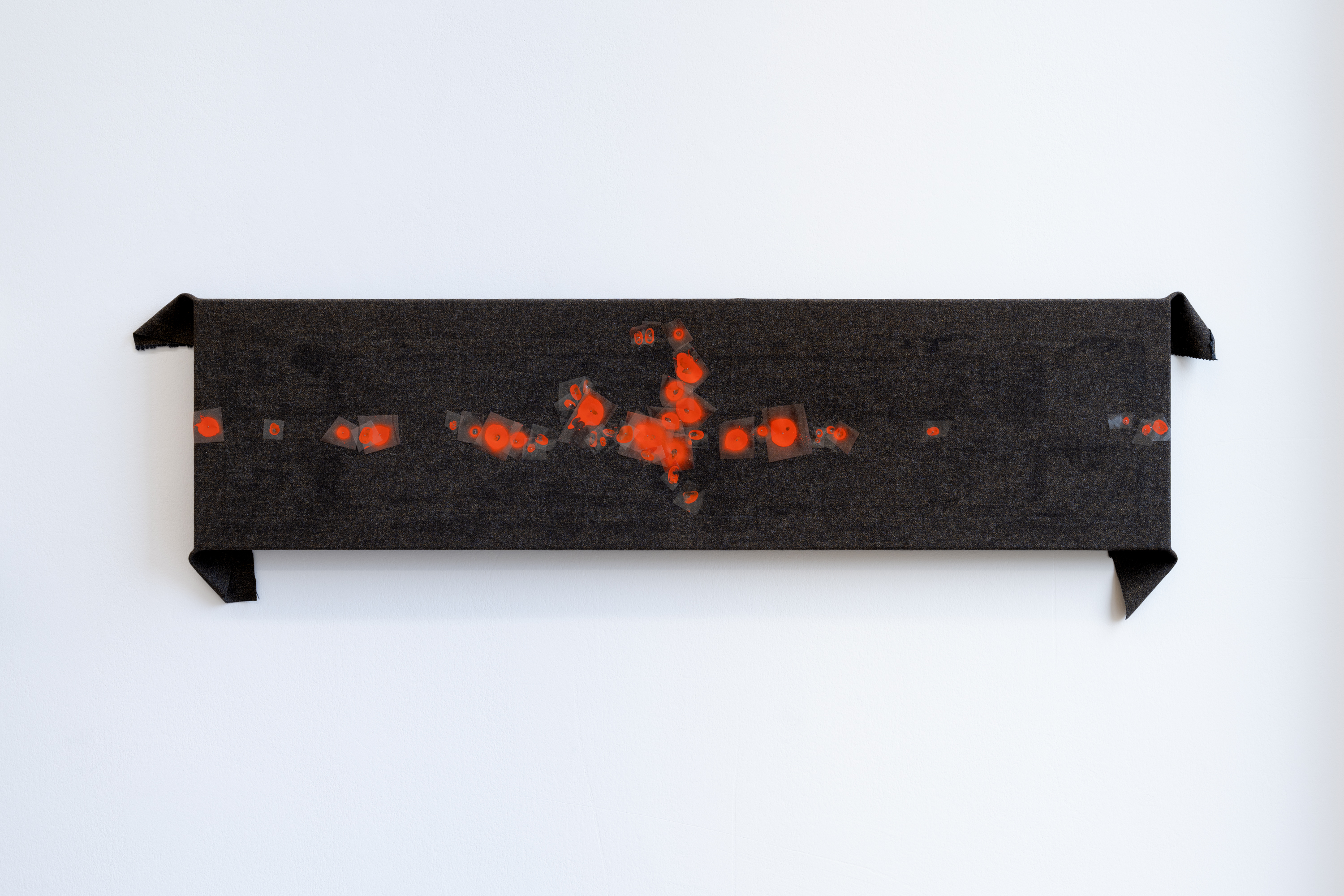
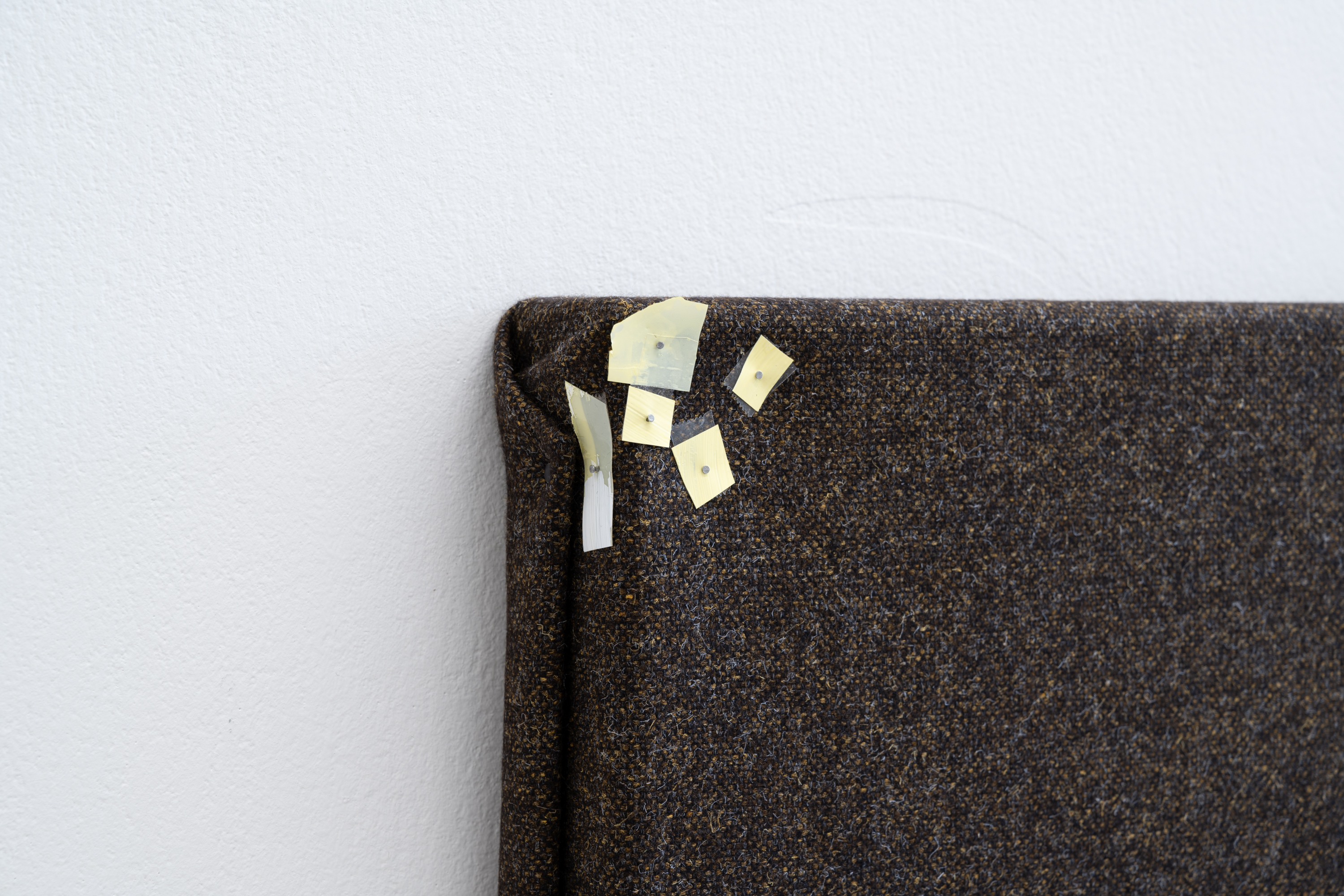
The materials are familiar and unpretentious: wooden frames typically used to stretch canvas, paper, cotton, pencil, gesso, plastic foil, nails, paint, plywood. Everything feels light, as if it could be adjusted or repositioned. And yet, nothing feels casual. Draft is not a step on the way to something else but a condition of its own. It holds time, attention, and decision-making. The German word Entwurf feels particularly apt here, suggesting a proposal that remains open rather than something waiting to be resolved. In Come to terms (working title), an unrolled sheet of paper with a drawing is pinned loosely to a wooden frame. At the corners, it pulls away from the structure meant to hold it down, restrained by nails that seem both excessive and on the verge of failing. The untucked corners in 10 pm (working title) flap softly in their newfound freedom from the confines of the backstage. These gestures are quiet, but deliberate.
Against white priming and pale supports, brown reads less as colour than evidence. In Tools for play (working title), plastic foil is fixed over paper and painted in white. I am reminded of the promise of newness in retail packaging, while traces of painted fingerprints beneath it quietly undo this idea. For Morton, impressions from daily life – things seen, read, overheard, or experienced in the studio – filter into the work without being fixed themes or literal translations. What matters is courtesy. A way of staying open to what is around her, while maintaining a clear internal logic. This thread runs consistently through her practice. It grows from a self-iterative working process, where one work leads naturally but non-linearly to the next. Nothing is random but develops from chance found within formal constraint.
Morton’s practice is rooted in spatial investigation, not only in how the works respond to architecture, which they do with great sensitivity, but in how surfaces themselves are treated as sites. A picture plane becomes a room. A plinth refuses to hide in utility and instead insists on being an object for consideration. Painting behaves like display, display behaves like sculpture, and the work begins to feel like a stage. One work carries a short statement. In British pantomime, meaning is not delivered from the stage alone but shaped through interruption, disagreement, and the audience talking back. The story remains open, constantly corrected and renegotiated in real time. “Oh no it is not”. “OH YES IT IS”.
Jack Pryce