

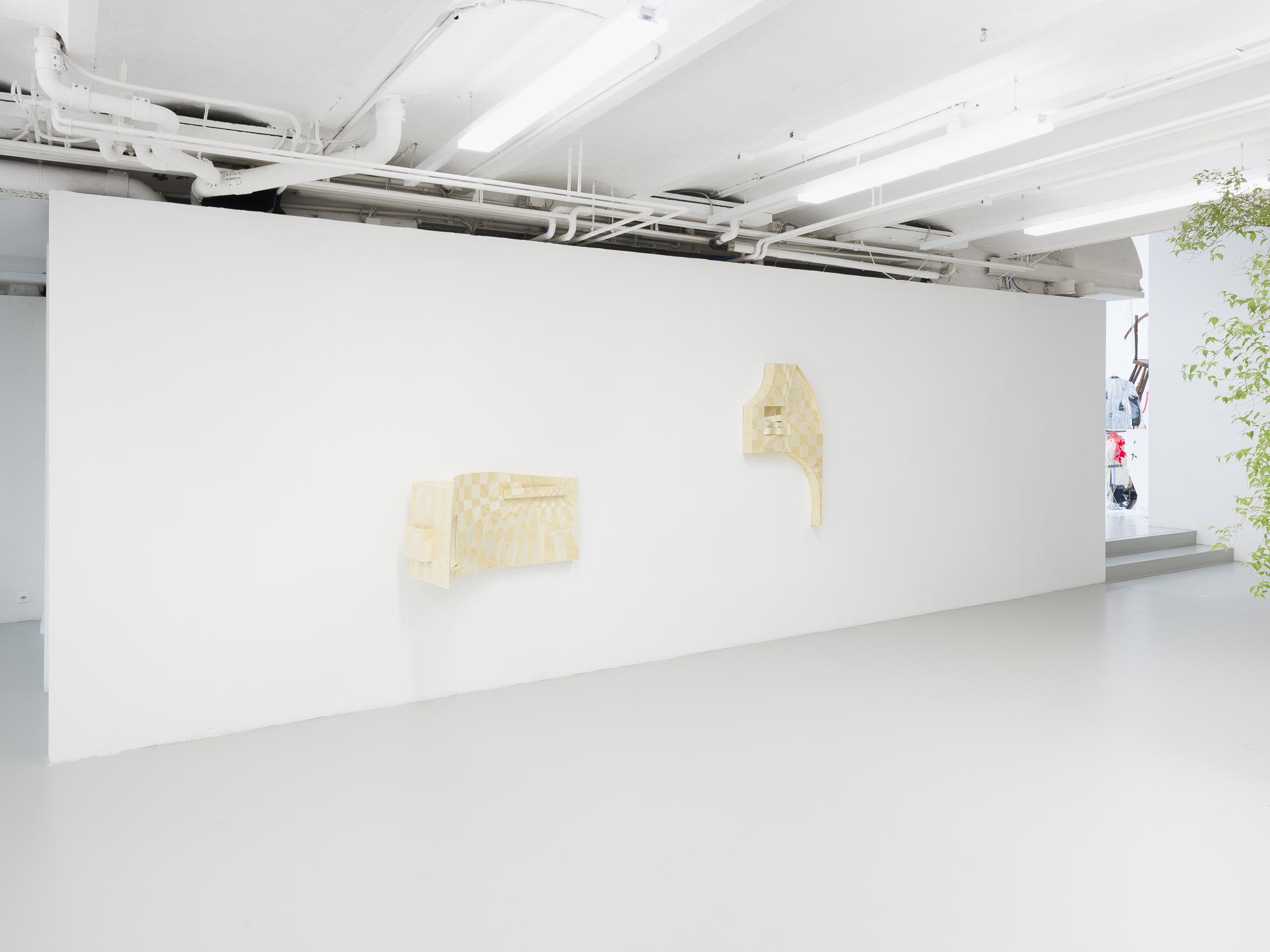
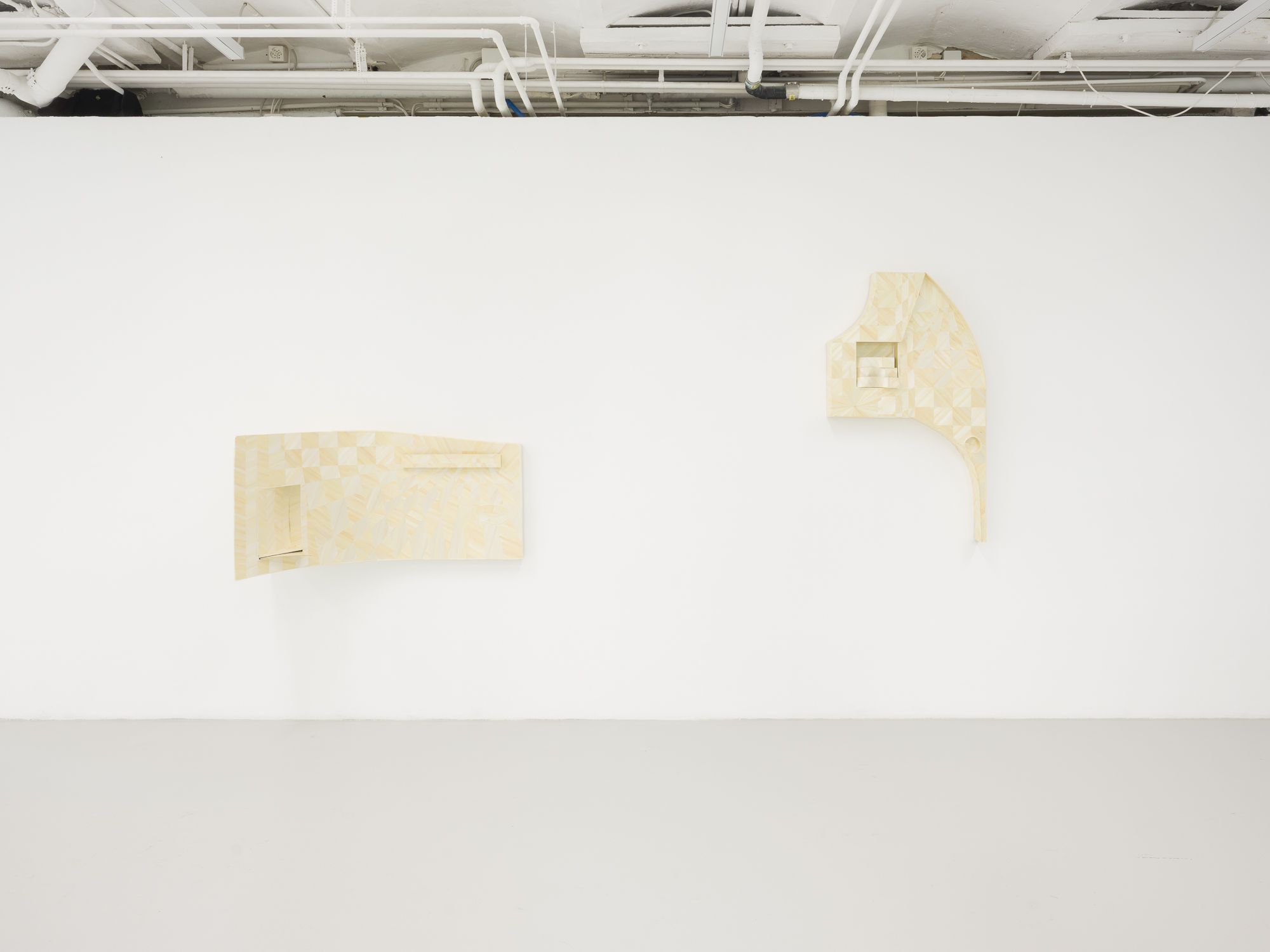
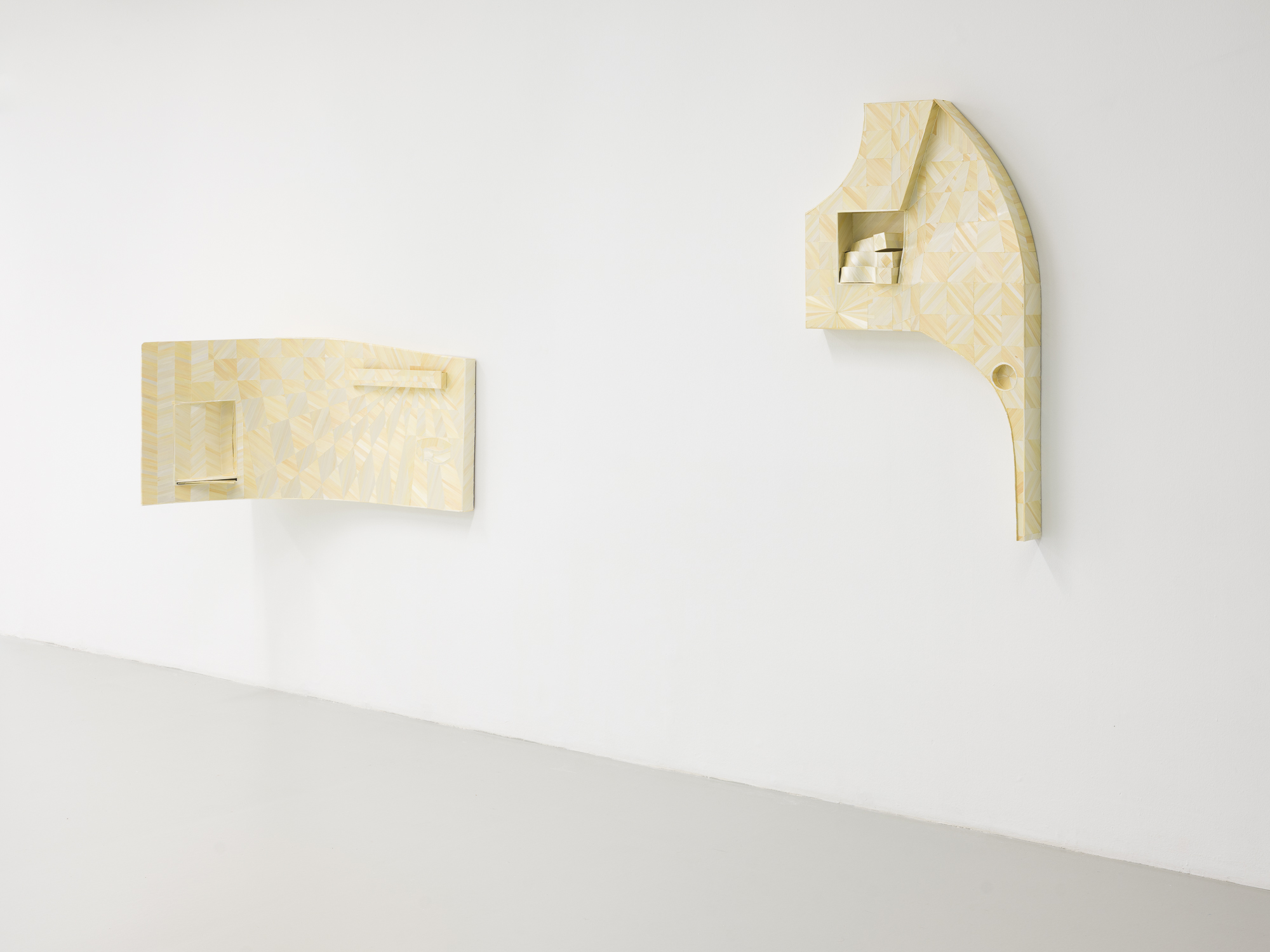
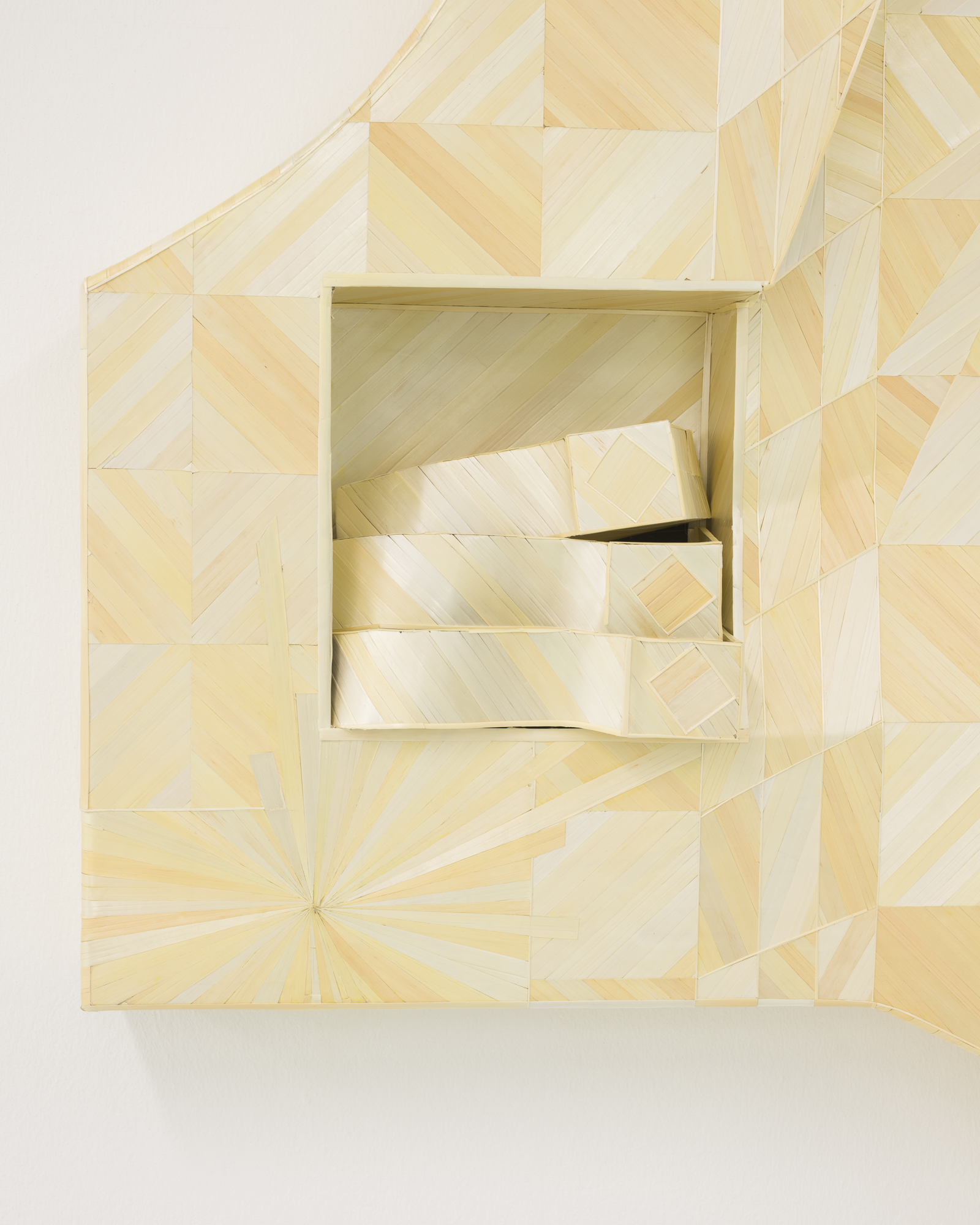
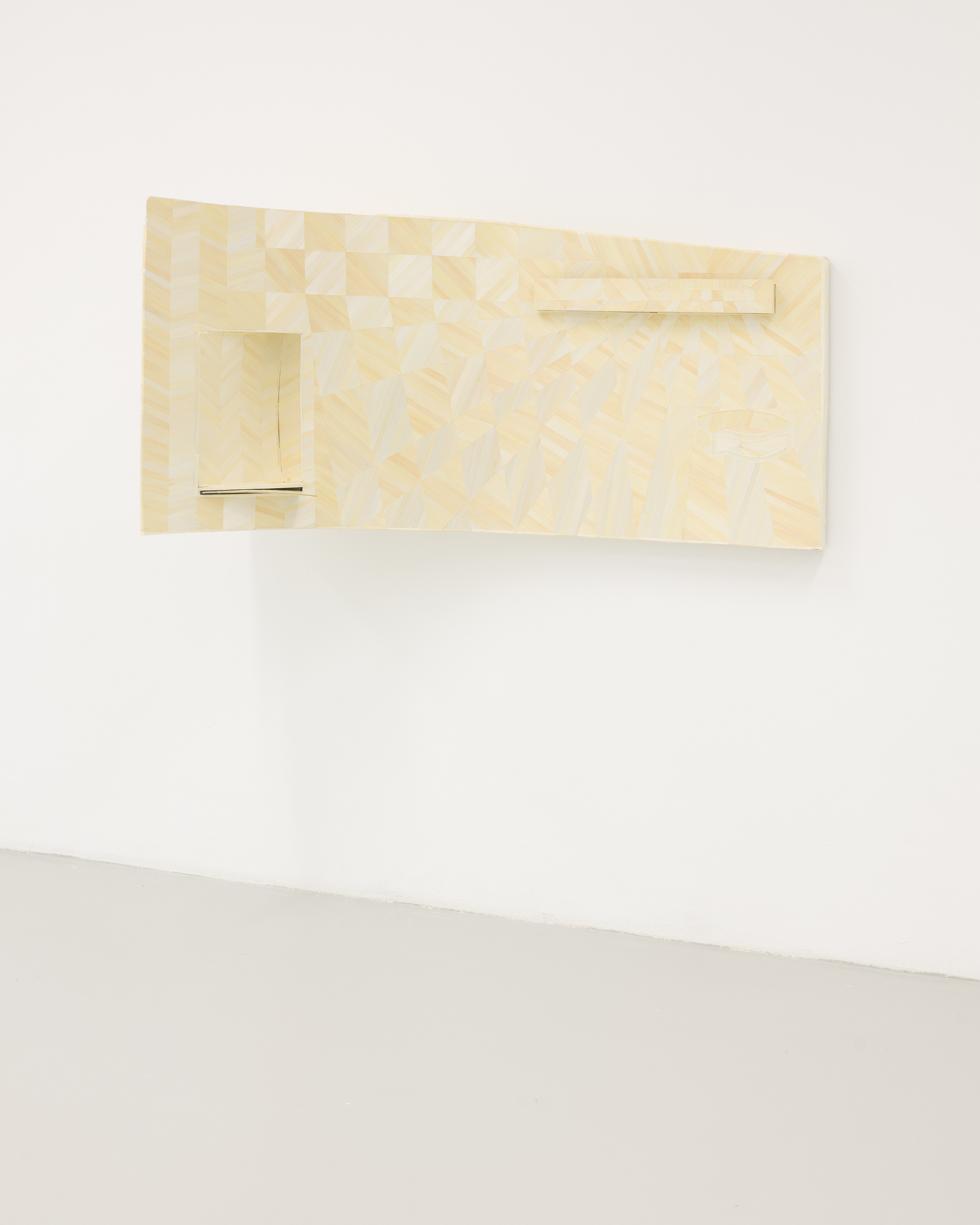
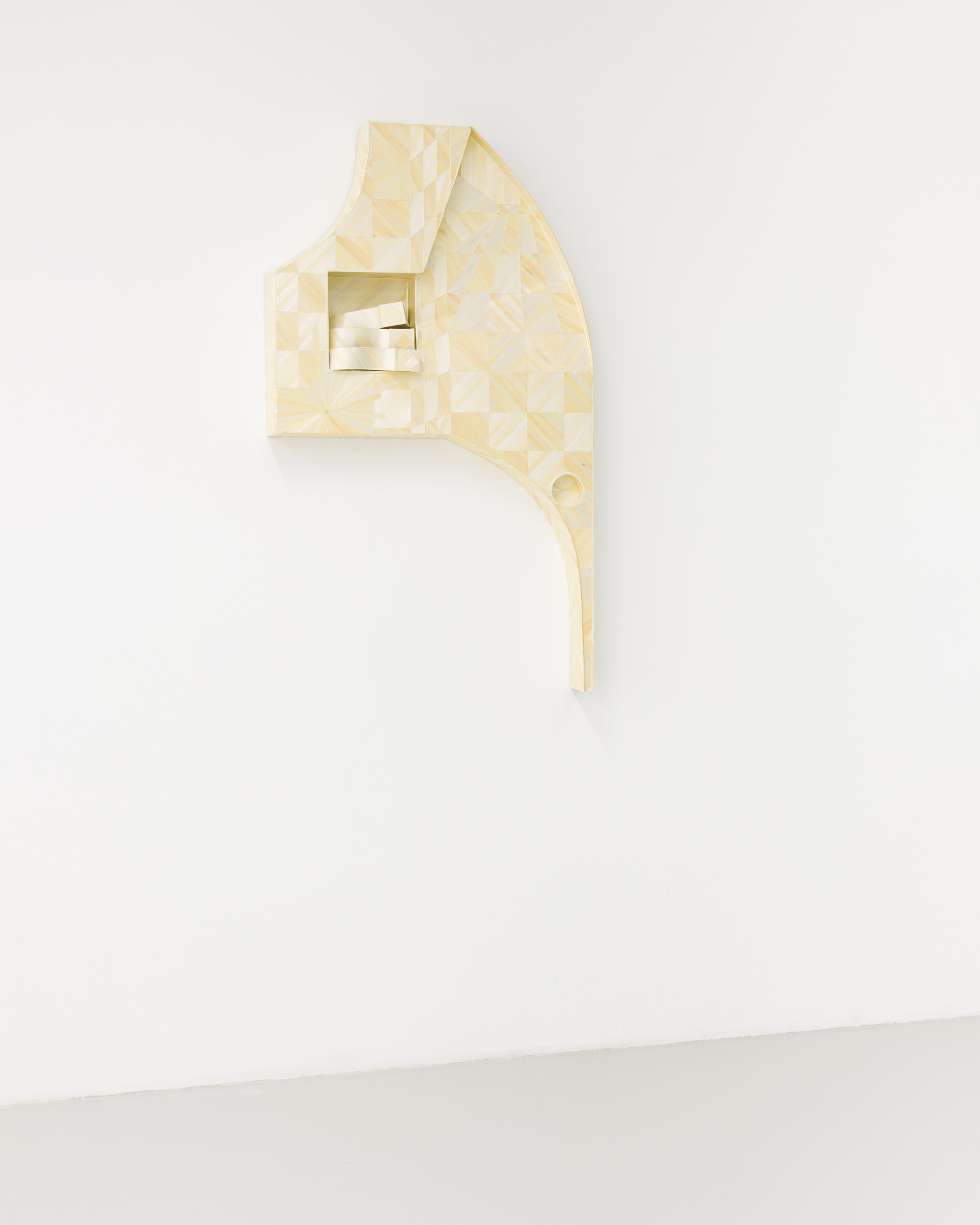
Staged Desire, 2025
Folded Secrets, 2025
The first work I encountered by Anna Christen was Jeux d’eau (2024) at last summer’s annual degree show in Zurich. Three objects, fountains (kind of), were installed across floor and wall, made from epoxy resin, MDF, nylon stockings, and a water pump. They felt strangely alive, almost creature-like in their presence, unsettling me in ways I couldn’t quite define. Art schools are impossible spaces to exhibit in, yet Christen’s work, playing skilfully with the place, scale, presence and ambiguous functionality, displaced me momentarily.
Since graduating, Christen has been working in a compact, shared studio on the outskirts of Zurich. The building itself, once a butcher's shop, stands alone amid an ongoing demolition project. Between the bulldozers, debris, and constant vibrations, Christen maximises every inch for production, acquiring her own tools and machinery whilst mastering the necessary hand skills on the go. The works on view at CAN, produced within these tight quarters, reflect the persistence of an artist determined to explore and challenge the idea of craft from the ground up.
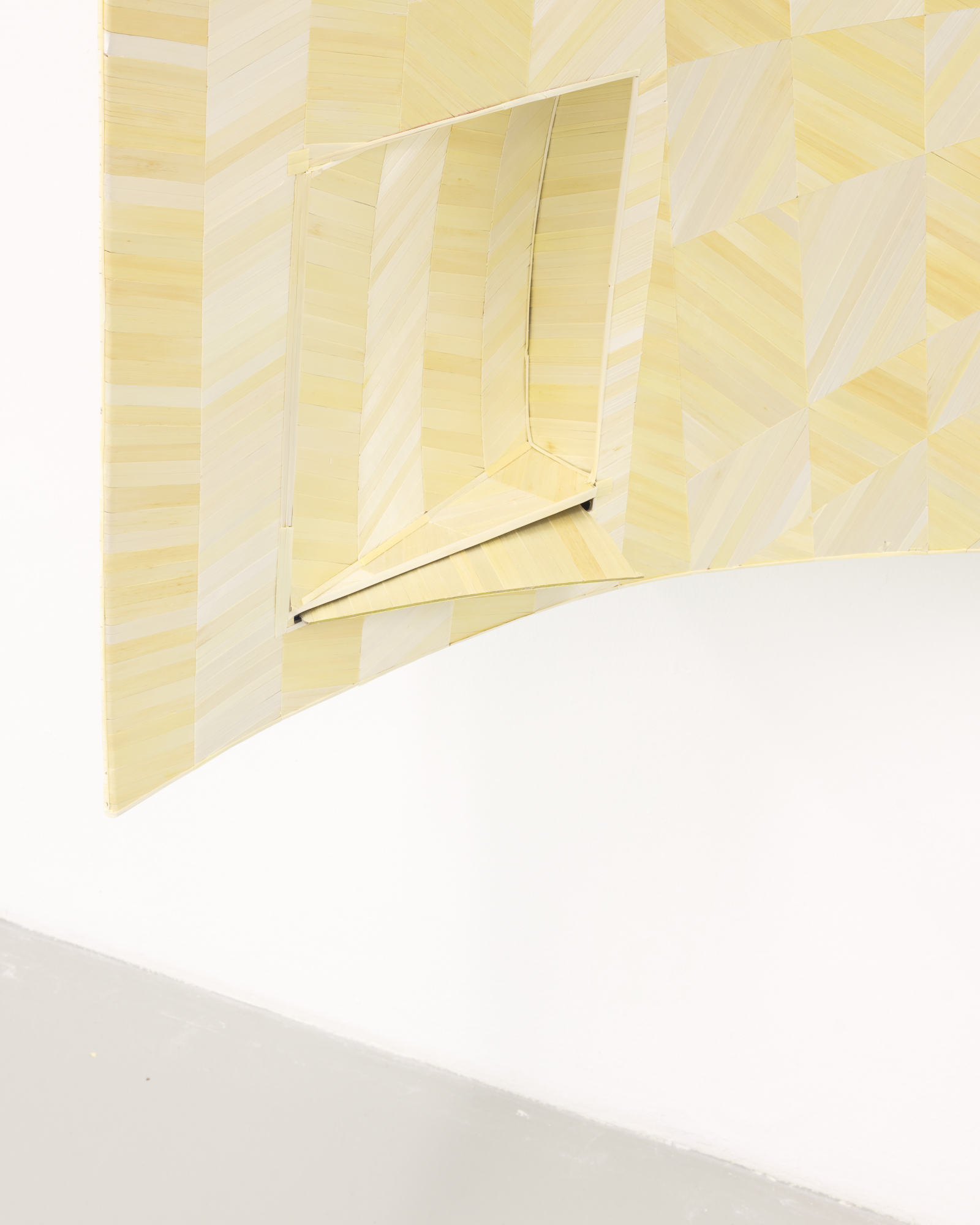
Staged Desire and Folded Secrets (2025) are composed of wood and rye straw marquetry, a technique historically known for its affordability and reflective properties. The delicate shine of the straw echoes the illuminated stages that inspired Christen’s brief job as a set designer, highlighting each piece’s performative character. Folded Secrets underlines this performative aspect; like a miniature stage, a new act is revealed each time the cabinet drawer opens via an electric mechanism, revealing unexpected voids and recesses. This functionality draws on research into the 18th-century Verwandlungstisch by German ebenist Abraham Roentgen (*1711; †1793), where the furniture’s identity continuously shifts to accommodate writing, storage and secret-keeping.
Christen is interested in the “staging” of display in high-end shop windows or museums. Much like the lavish scenarios crafted by luxury storefronts, where a single item is elevated through a choreography of textures, surfaces, and lighting, her pieces unveil their own miniaturised worlds. Yet the carefully proportioned compartments and surfaces blur the line between architectural model and functional furniture, creating a sense of dislocation: are we encountering a conceptual prototype, a sculptural experiment, or an inhabitable design? Christen’s engagement with Carolyn Sargentson’s research at the Victoria and Albert Museum reveals how shifting social norms shaped furniture design (1). As domestic and public spheres evolved, display furniture adapted to new functional and aesthetic needs. Christen’s reimagined pieces honour this legacy while contributing to contemporary discourse, reaffirming the relevance of multi functionality, visual appeal, and emotional resonance in material culture.
Just as Jeux d’eau once unsettled the boundaries of scale and environment, Staged Desire and Folded Secrets straddle past and present, collapsing distinctions between object and stage, narrative and function. These pieces not only expand on Christen’s earlier explorations but also circle back to that initial moment of my displacement: an invitation to let the ordinary become just unfamiliar enough for it to transport us someplace else.
Jack Pryce
(1) Carolyn Sargentson, Reading, Writing, and Roentgen, YouTube, 06.12.2012 (https://youtu.be/dQRX24IrfSw?si=v6He6FR7OwzUYWSo, last accessed 16.04.2025)