

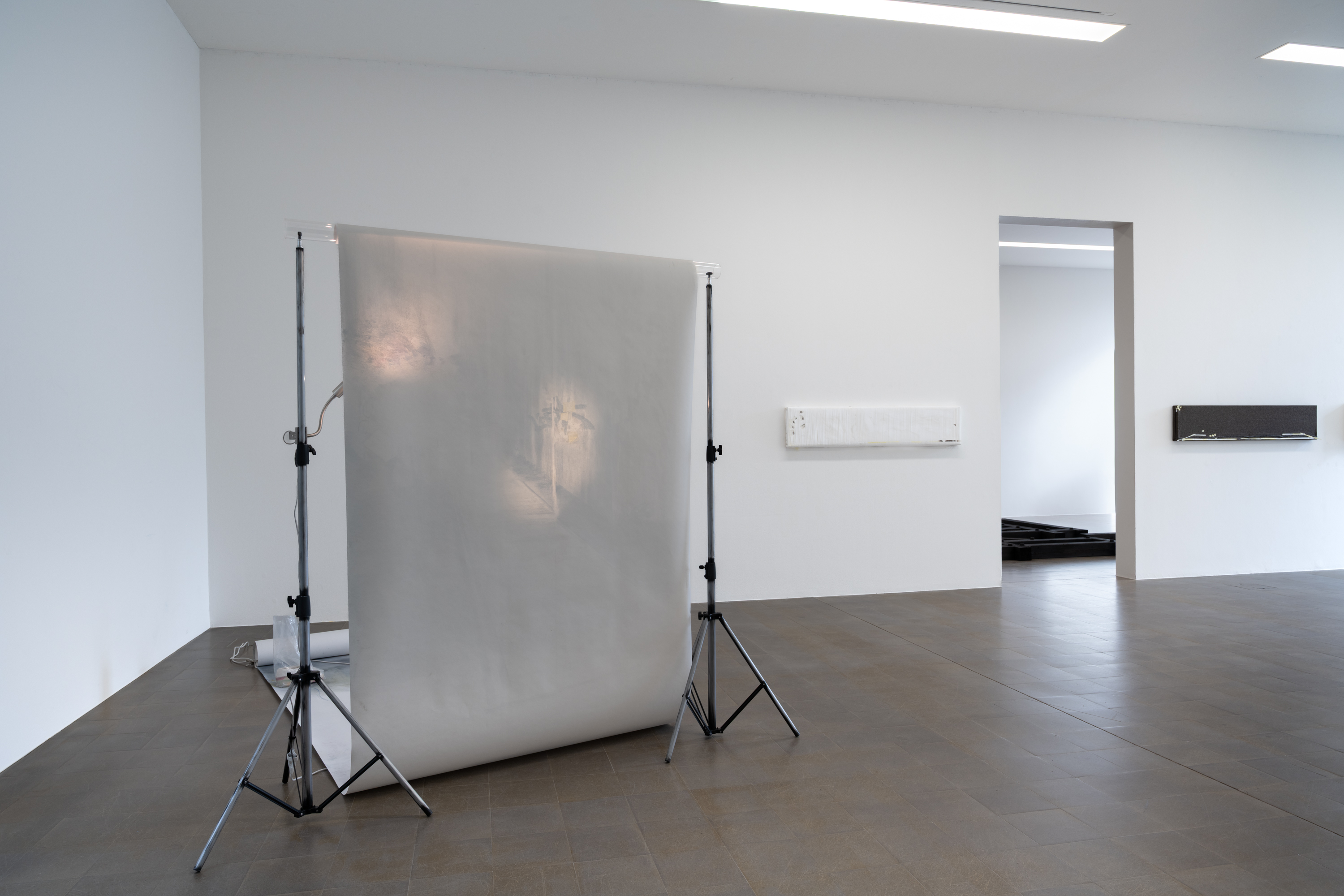
A glow attracts us, softened by the sheet of paper covering it.
An afterimage is the residual mark left from the direct contact between the retina and light: we look away, and the image of the lightsource remains etched in our field of vision for a few seconds. Here, in front of Estéfana Román Matesanz’s A Flick to Stop the Ball in Mid-Flight, our eyes are protected, and yet we can notice a stain, right in the middle of a lightbeam, barely visible, almost readable. Look! If the light is on, it means that someone has been there.
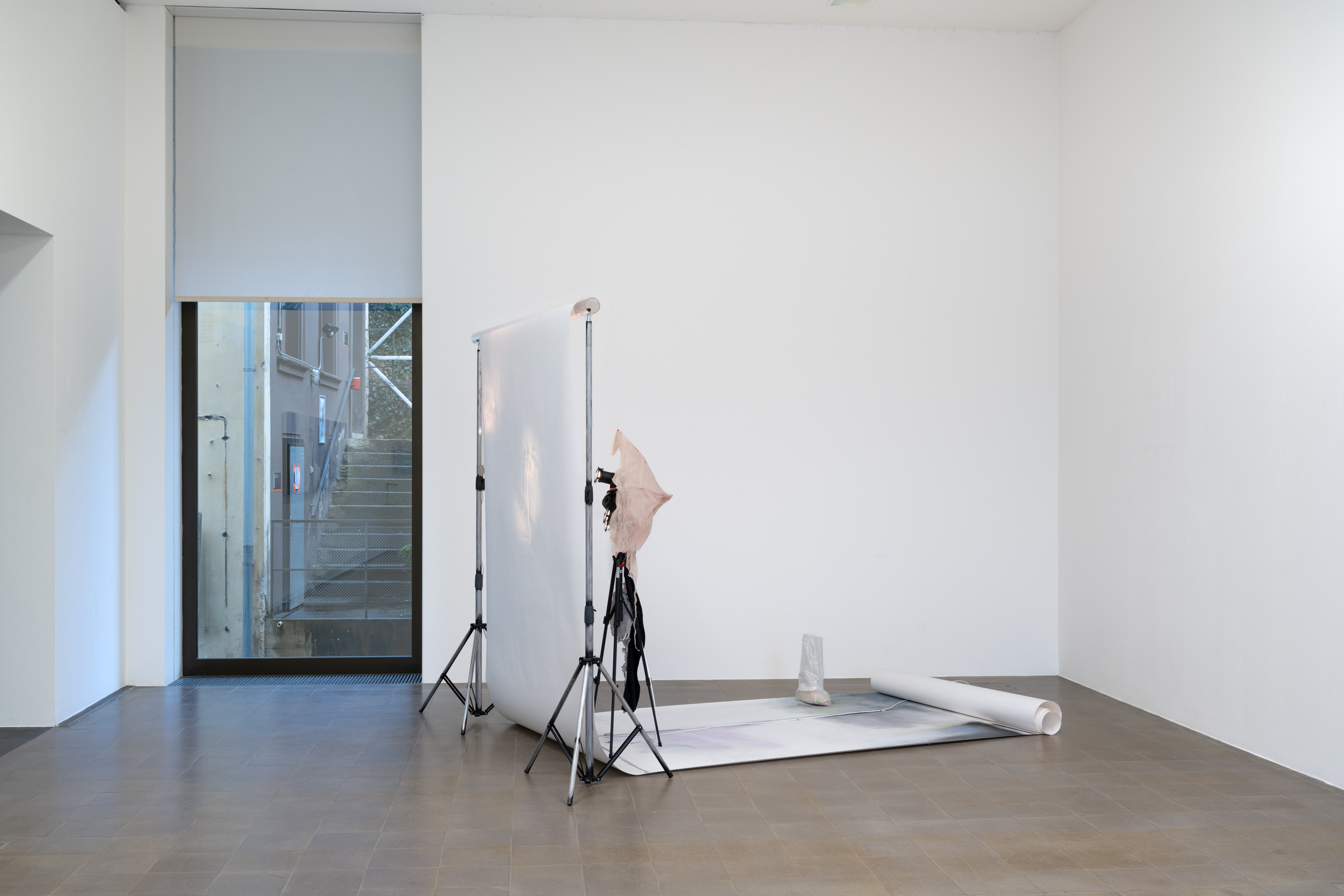
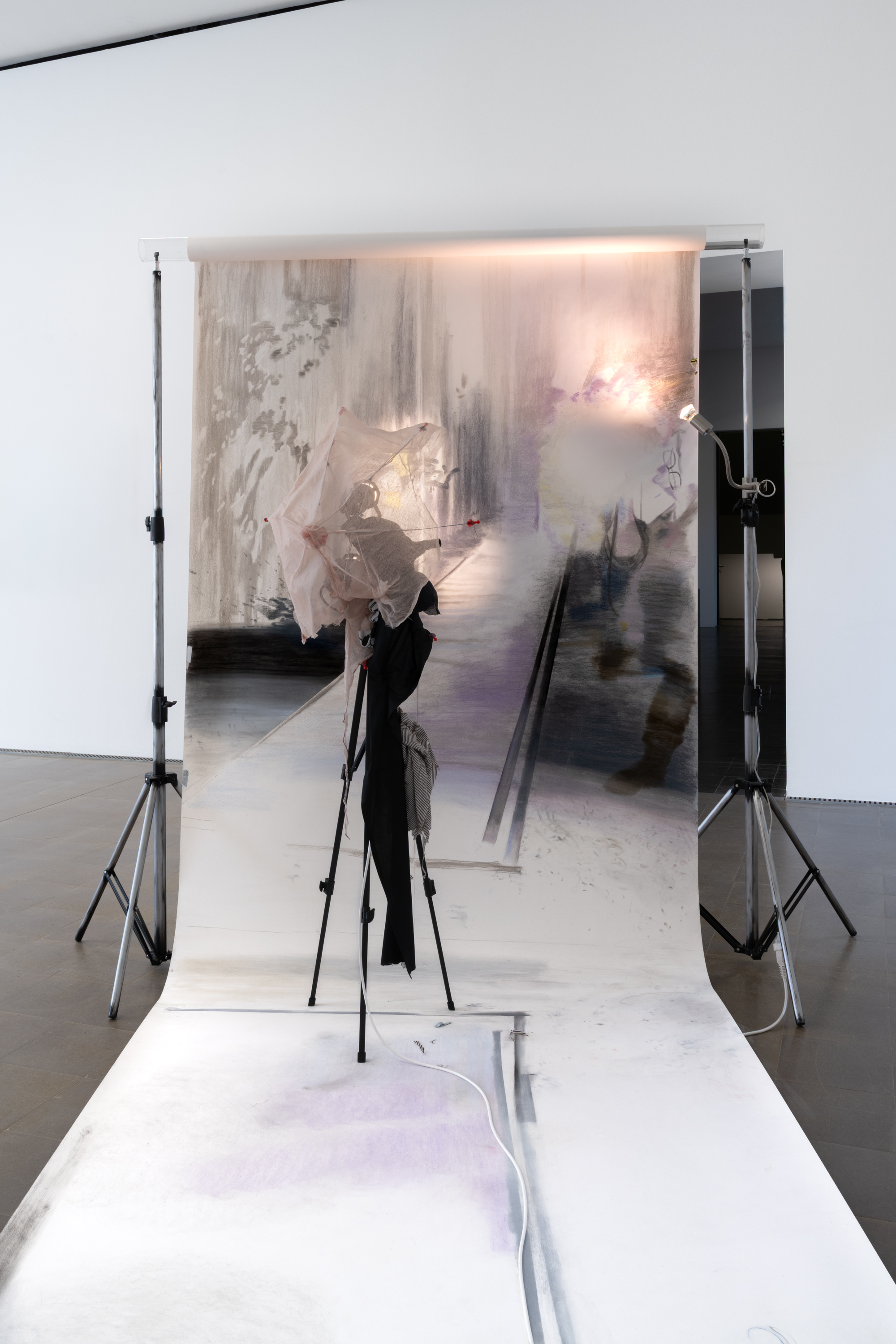
The installation takes the shape of a photo studio, and the illuminated illustration is inspired by an archive image of some backstages. The artist invites us behind the scene, a place supposed to remain in the shadows. Only a dreamer would find a reason to wander there, and find interest in whatever precedes the actual show, in such a rundown building. “They find a place to dwell in this world of cracked ceilings” (1). There isn’t any ghostly presence, the scene isn’t haunted: we are in an inbetween stage, where imagination flourishes during moments of daydreaming.
Thanks to the lighting, the outline of the life-size drawing is clear even when it
shows us its back. Without dazzling us, the light guides us to unravel the mystery, but does not spoil the pleasure of the quest. The few post-its on the wall are illegible, forcing us to give in and enjoy the touches of yellow they add to the predominantly grey image. What used to be a floral pattern on the original photograph now stains the wall. All that remains is the shadow of a foot and a pair of glasses. The objects blend themselves into a room emptied of its subjects and context.
The backstages seem deserted, yet the presence of the individuals who inhabited it is almost palpable. We can notice the traces of this passage on the ground, a few stains, a crumpled piece of paper or even a single shoe. Left as is, perhaps forgotten, these objects regain their autonomy. Now devoid of any background story or utility, they are reduced to their materiality, allowing their aesthetic and poetic potential to emerge.
Each glance leaves a different impression, and the longer we stare at these objects, the more our vision plays tricks on us, or rather, the more we can savour the interplay of colours and textures before us. One might imagine that the composition is the result of chance, a small miracle following a gust of wind or the passage of time. A mere object turns into a sculpture, which turns into a still life, which turns into an assemblage of abstract forms, which turns into a colourful blur, and so on and so forth. Stripped of any narrative or function, these objects reawaken the simple pleasure of viewing as a sensory experience, satisfying the eye’s appetite.
The backstage area is seen as a transient place, “a highly malleable environment ” (2), which gives this installation a poetic rather than nostalgic feel. An imaginary yet tangible place, a sort of afterimage of the impression the artist had, when the space appeared to her as a material to be moulded rather than a stage on which a story is played out; We are behind the scenes, after all, so let us enjoy the backstage atmosphere without expecting a show at all costs. The backstages function as “an intermediate world where daydreams and reality intertwine” (3). Here, we savour the pleasure of the most trivial details, from the mark on the cracked wall to the crumpled piece of paper.
Flavia Vuagniaux
(Translated from French)
———