

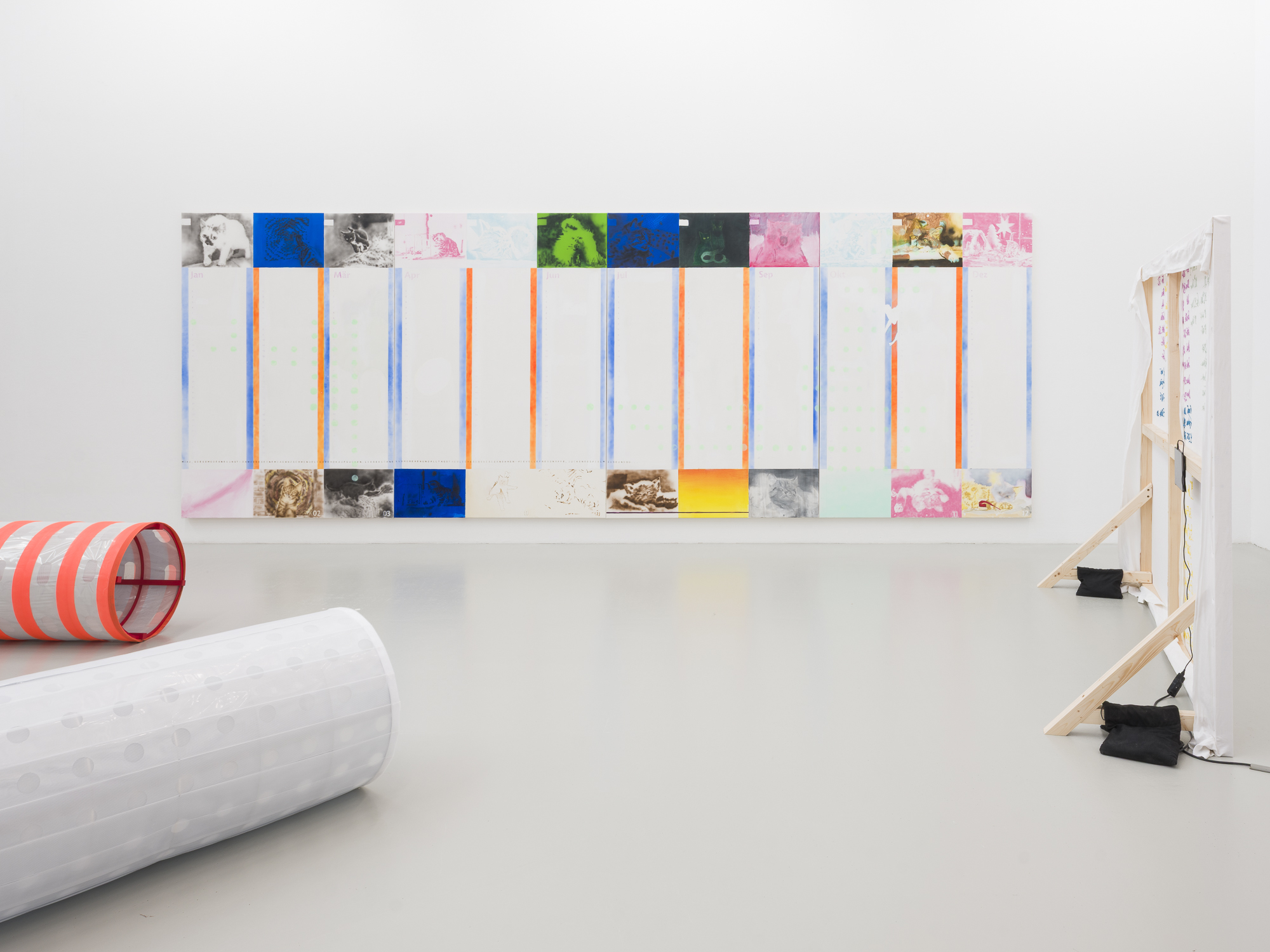
Horizontal Fashion, 2025
Acrylic, transferred printings, charcoal, silkscreen, oil on canvas
230 × 640 cm
Imagine waking up one day to find that all clocks have stopped ticking. Phones, wristwatches, kitchen and grandfather clocks, all ceased. Would chaos ensue or could we continue living a relatively normal life? Maybe punctuality could be aligned with celestial cycles. Our relationship with time remains fundamentally cultural, varying from place to place. In some settings, arriving on time is considered rude, while in others, being on time means arriving five minutes early. What we experience daily as a standardised division of time is, by definition, an artificial construct: work schedules, for instance, are rarely adapted to individual chronotypes – people’s natural inclinations for waking and sleeping – forcing everyone into structures that may not align with their biological rhythms. Without the imposed framework of hours, minutes and seconds, maybe we could develop a more intuitive, organic relationship with time… or would the loss of rigid synchronisation unravel the intricate coordination that modern life depends on?
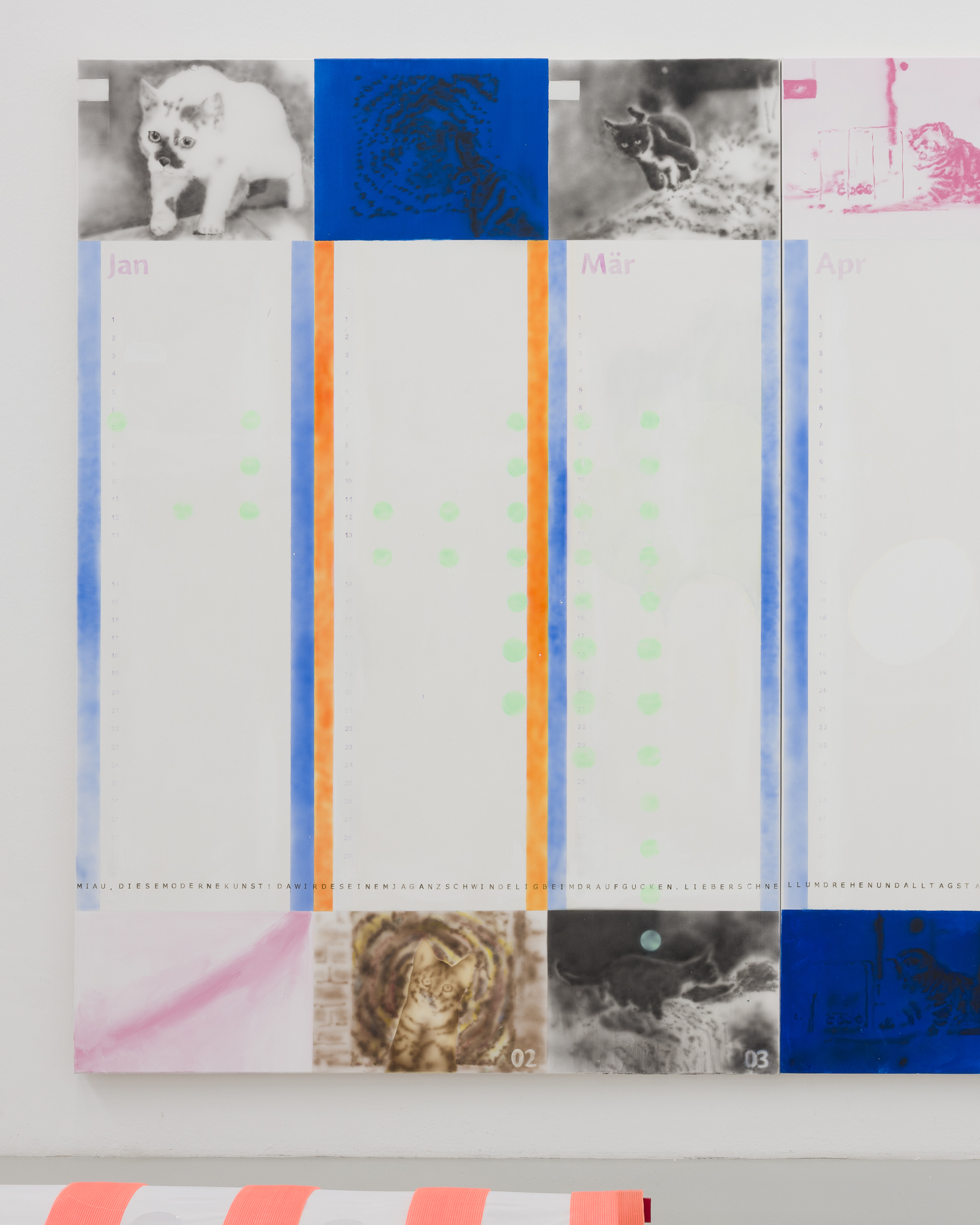
“Meow, this modern art! It makes you dizzy just looking at it. Better to quickly turn around and focus on everyday objects — like full food bowls, twitching toy mice, and so on…”
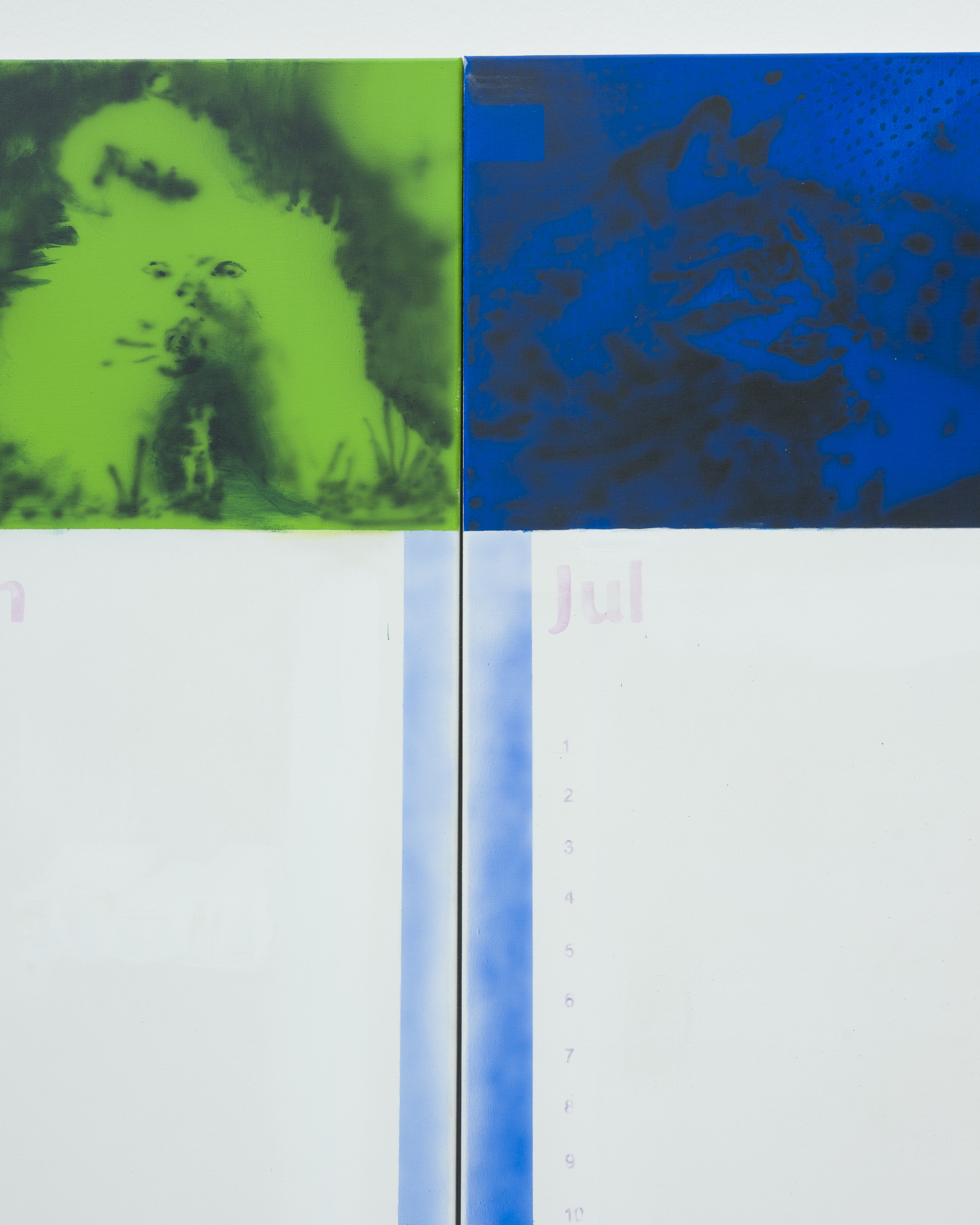
reads the February spread of Katzenleben Kalender, a 2024 calendar licensed by Whiskas and published by a calendar-making company. This German publication, featuring two cat photographs per month, is the original source material of Jorge Morocho Ibarra’s (based in Basel) newest painting, created for Plattform25. It isn’t uncommon for the painter to find inspiration in unexpected places, from film-stills to circus posters, Chilean novelists and Starbucks drinks: Morocho casts a wide net of intrigue. Everything is possibly fertile ground to discover new pictures, ideas and reflections to rework into paint, in what could be described as a ruminative practice of cycles of image consumption.
Morocho carries a heartfelt fascination for all things absurd, hypocritical, and contradictory in nature, revealing a sharpened eye for the ironic forces behind visual culture. His approach to representation maintains a level of descriptive excess, tempered by an assertive style that doesn’t shy away from leaving the bones of the painting bare.
Consider Horizontal Fashion (2025), where Morocho has essentially unfolded what was an extremely vertical cat calendar – the original document measures 70 × 16 cm – laying side by side each month, transforming what was once a top-down reading of time into a year-long panorama. Here, time is a landscape, while cats – positioned at the edge of each month – are a frame, enclosing 365 days with fluffy cuteness.
Diogo Pinto