

Long before language convinces, it appears. It arranges itself visually in the mind as symbols, slogans, icons, fragments. Stripped of grammar and explanation, language reveals its skeletal form – a residue that functions less like speech and more like an image. Advertising understood this early; its great innovation was not persuasion through argument, but through recognition. Meaning does not need to be explained if it can be seen: a cowboy, a smile, a typeface, a promise reduced to three words. Language collapses into shape as words begin to behave like images once they are repeated often enough, detached from their origins and allowed to circulate as signs. Slogans, catchphrases, and clichés are not failed language, but one that has completed its migration into the visual realm, where familiarity replaces interpretation and recognition stands in for understanding.
Through painting, Camille Lütjens (*San Diego, USA) has, in recent years, experimented with ways of stripping language down to its bones, not by tracing it back to an original source but by locating a depth that lies beneath the familiar surfaces and formats of consumer culture. Her work toys with
conventions while deliberately adopting a form of “amateurism” as a conceptual stance. By association, she moves between pictorial registers in search of moments where meaning hesitates. What emerges are not messages but a construct that reorganises expectation, images and phrases held just long enough for their instability to become palpable.
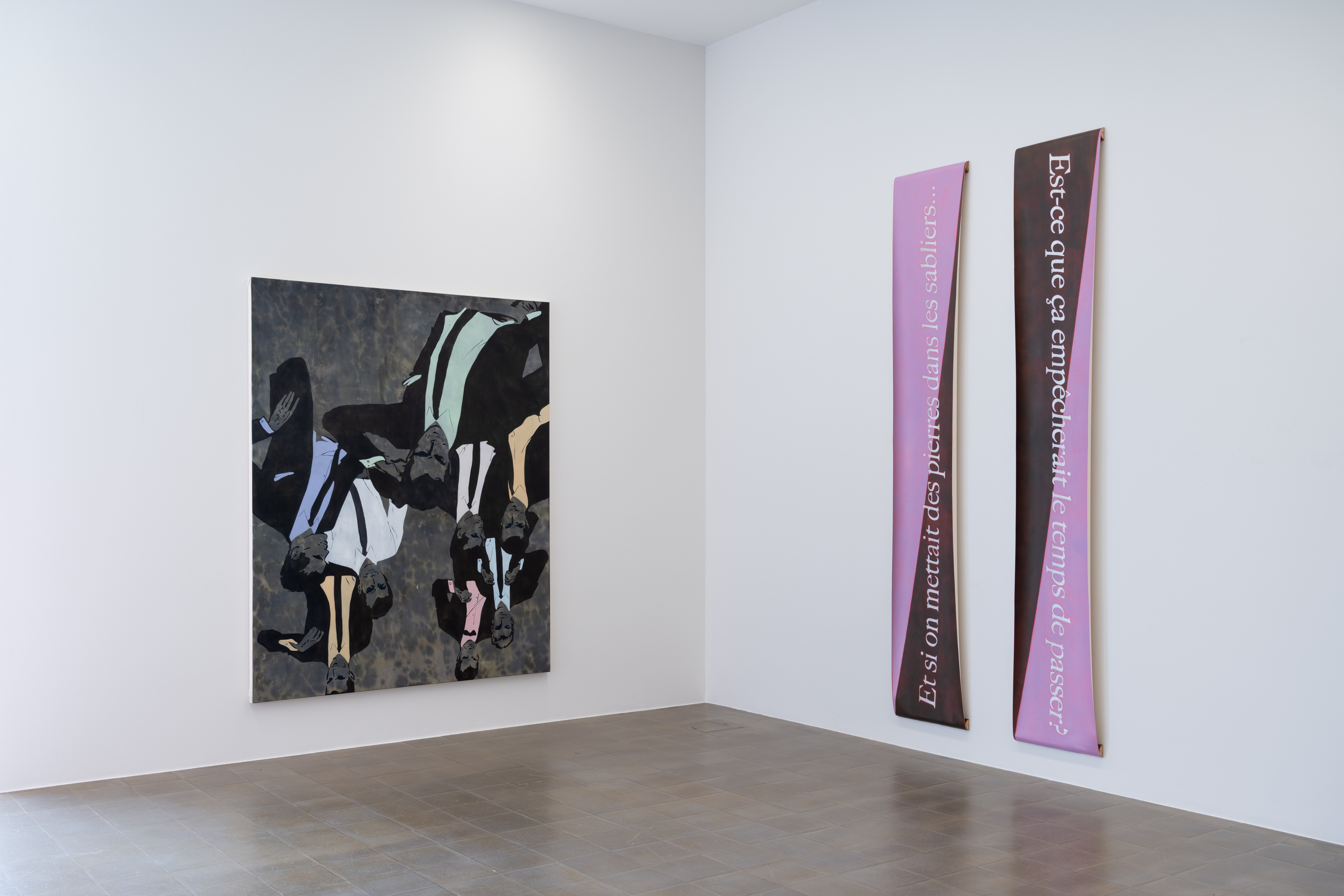
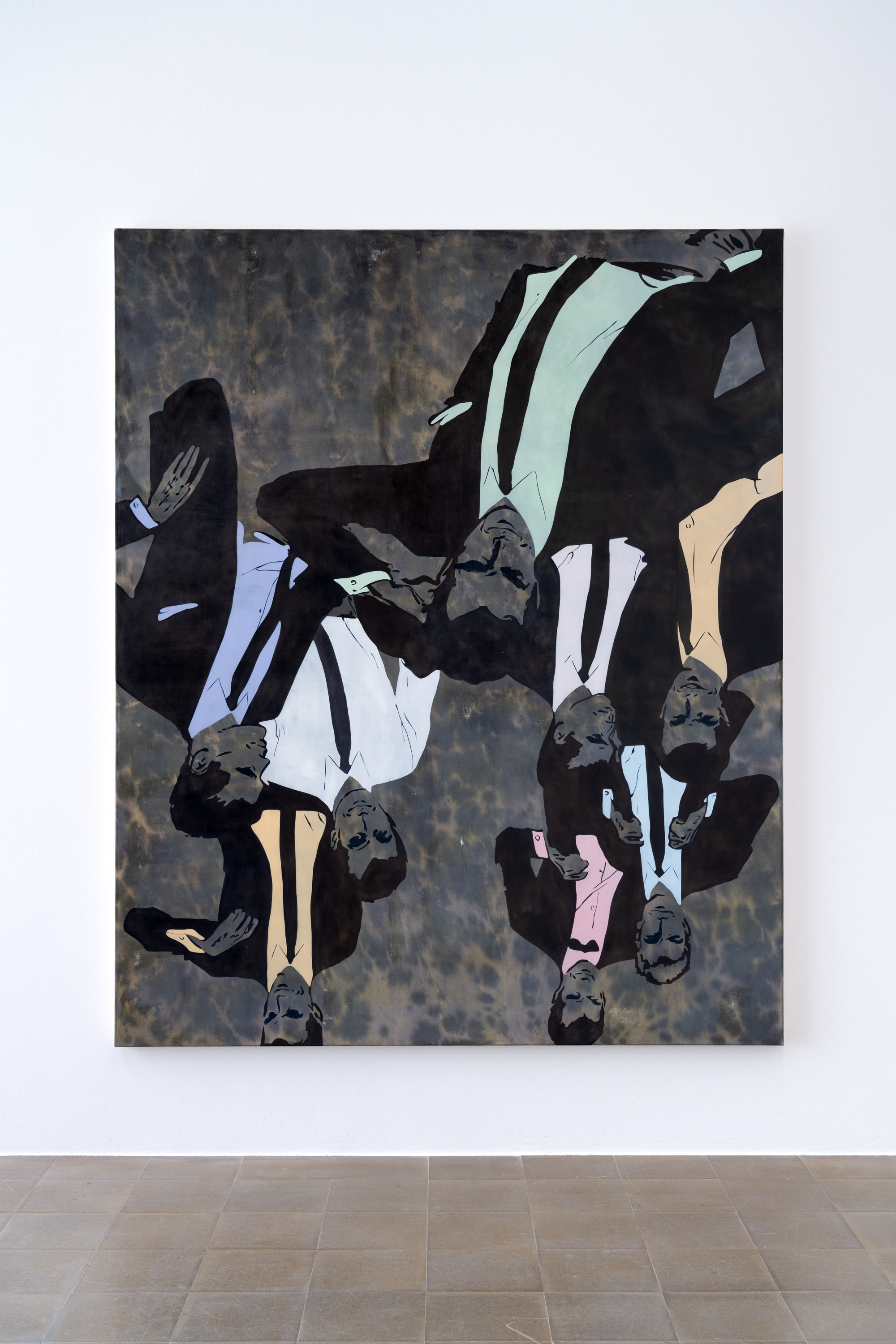
By drawing on archival material from mass media and childhood imagination, the artist positions her paintings within a realm shaped by advertising and its promises of immediacy, aspiration, and timelessness. Text fragments echo motivational gestures while quietly undermining them, their arrangement requiring physical adjustment from the viewer and evoking cycles of return rather than progress. Figures appear idealised and precarious at once, frozen between elevation and collapse. Humour operates as a strategic device within this process, introducing a slippage that allows contradiction and ambivalence without closure.
For Plattform26, the artist has created two new works that extend this inquiry by returning to imagery that once sustained a dominant masculine imaginary and placing it in a state of delay. Suited bodies, emblematic of confidence, productivity, and authority, are rendered weightless and fickle, no longer advancing but hanging in an unresolved present. Elsewhere, a fragment of language gestures toward seizing the moment, only to fold back on itself. Time is no longer linear, but stalled and quietly distended.
Together, these paintings reflect a visual culture that endlessly recycles its own models, where advertising’s promise of timeless relevance gives way to repetition without renewal. Lütjens’ work resists affirmation ; It holds persuasion in suspension, exposing how recognition continues to operate even after belief has thinned, and how clichés persist not because they convince, but because they remain visible.
Diogo Pinto