

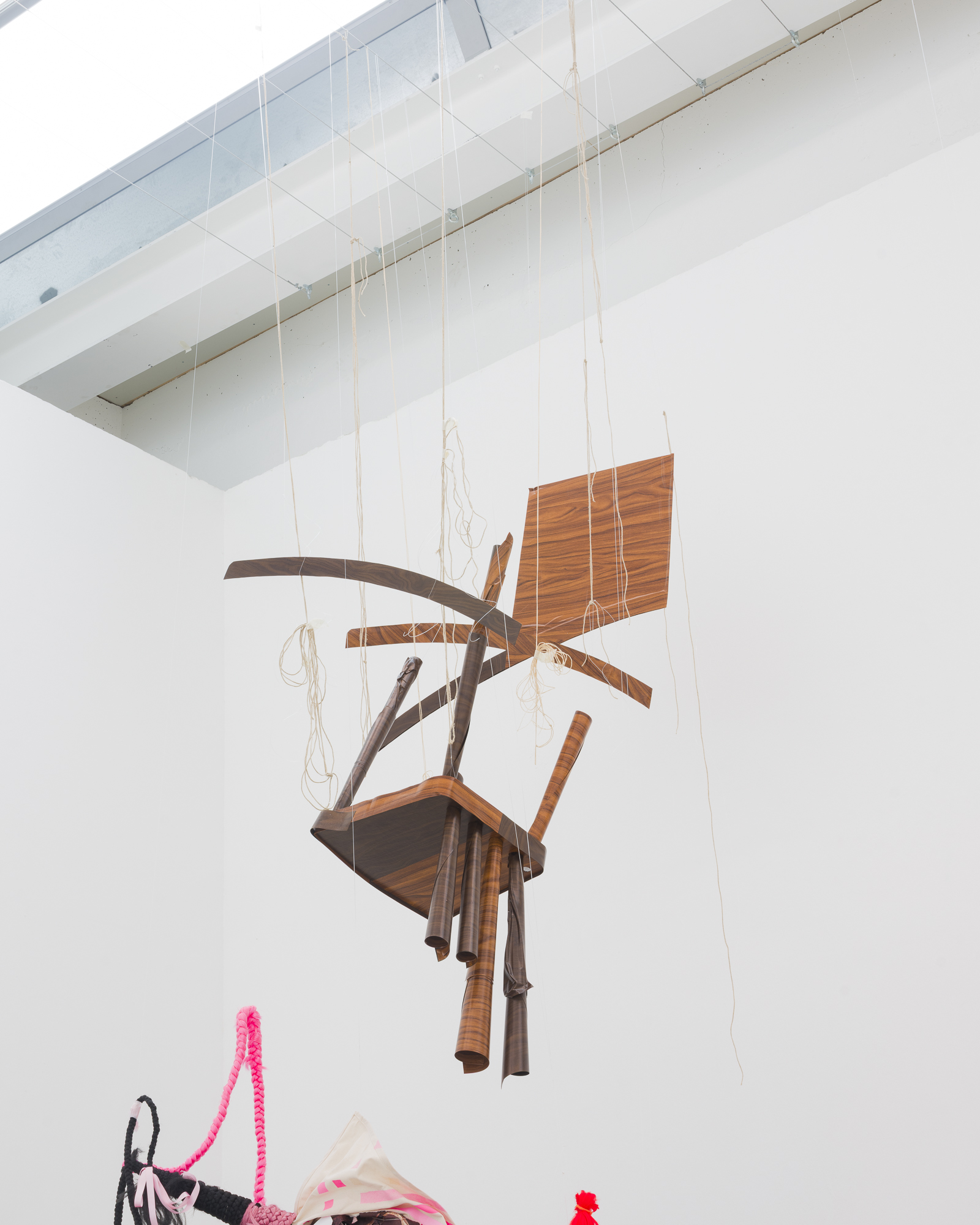
Down the rabbit hole, how to invest a world that is not yours?, 2025
Canvas, fabric, paper, Plexiglas, cardboard, Sagex, various objects, PVC tarpaulins
Dimensions variable
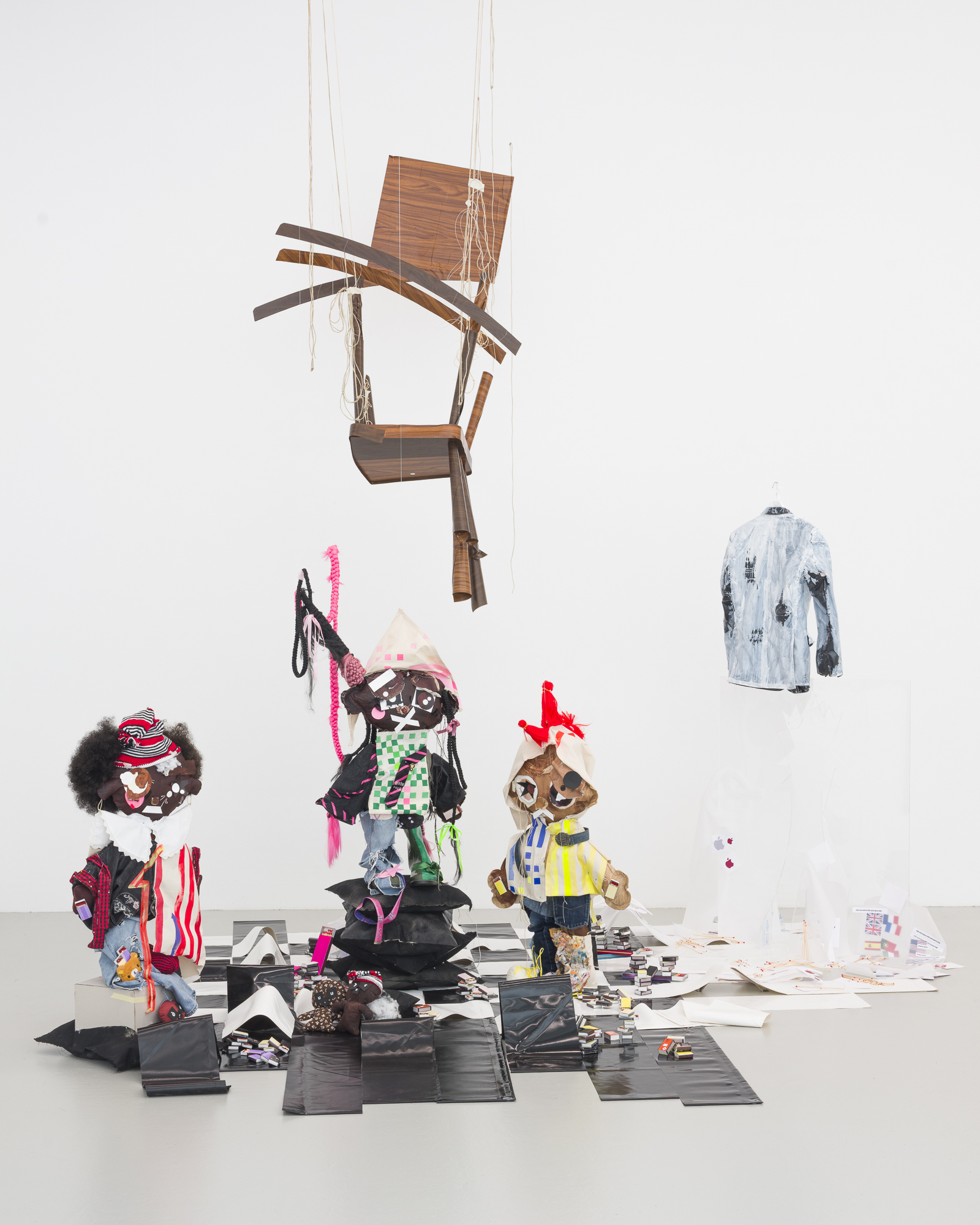
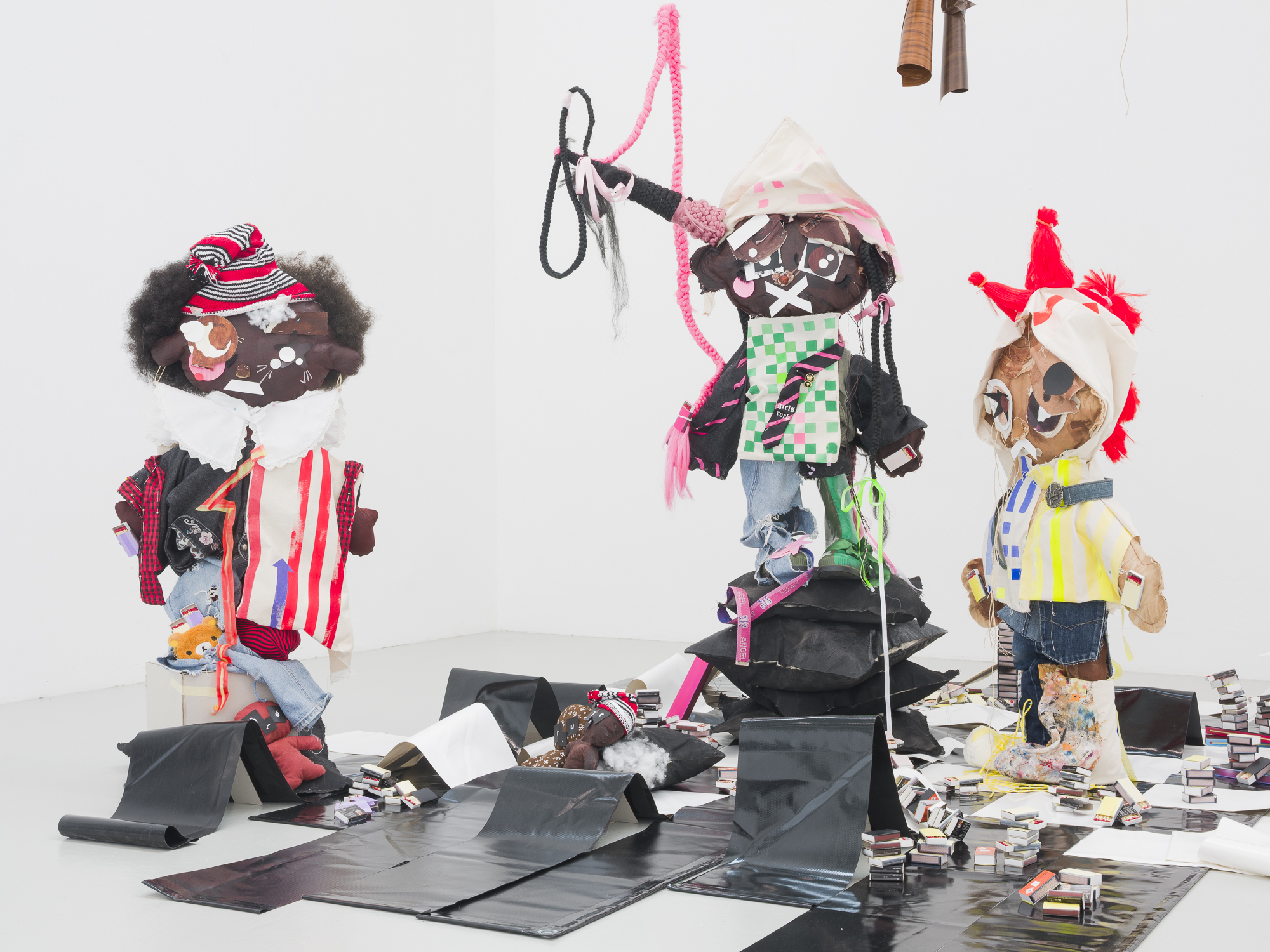
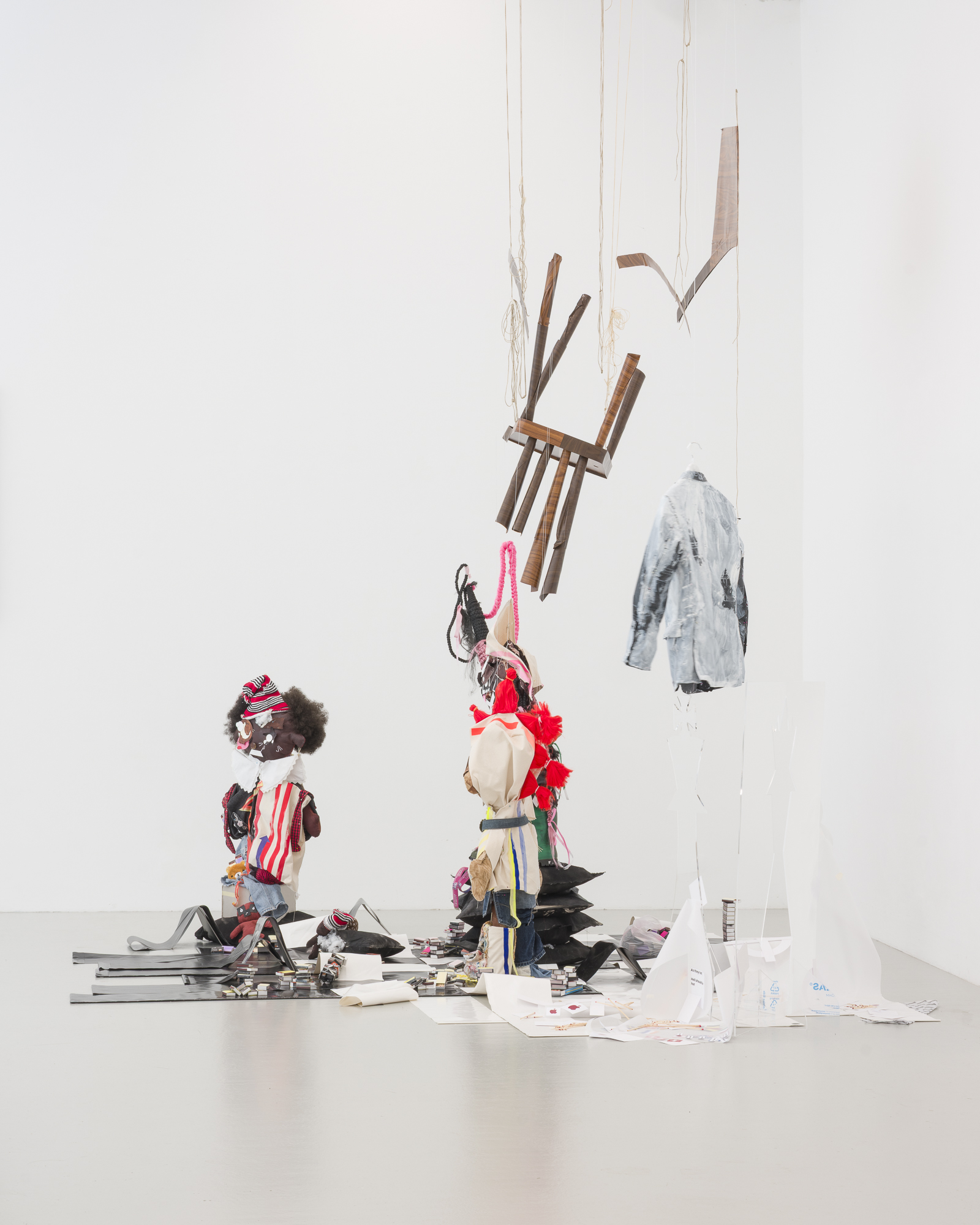
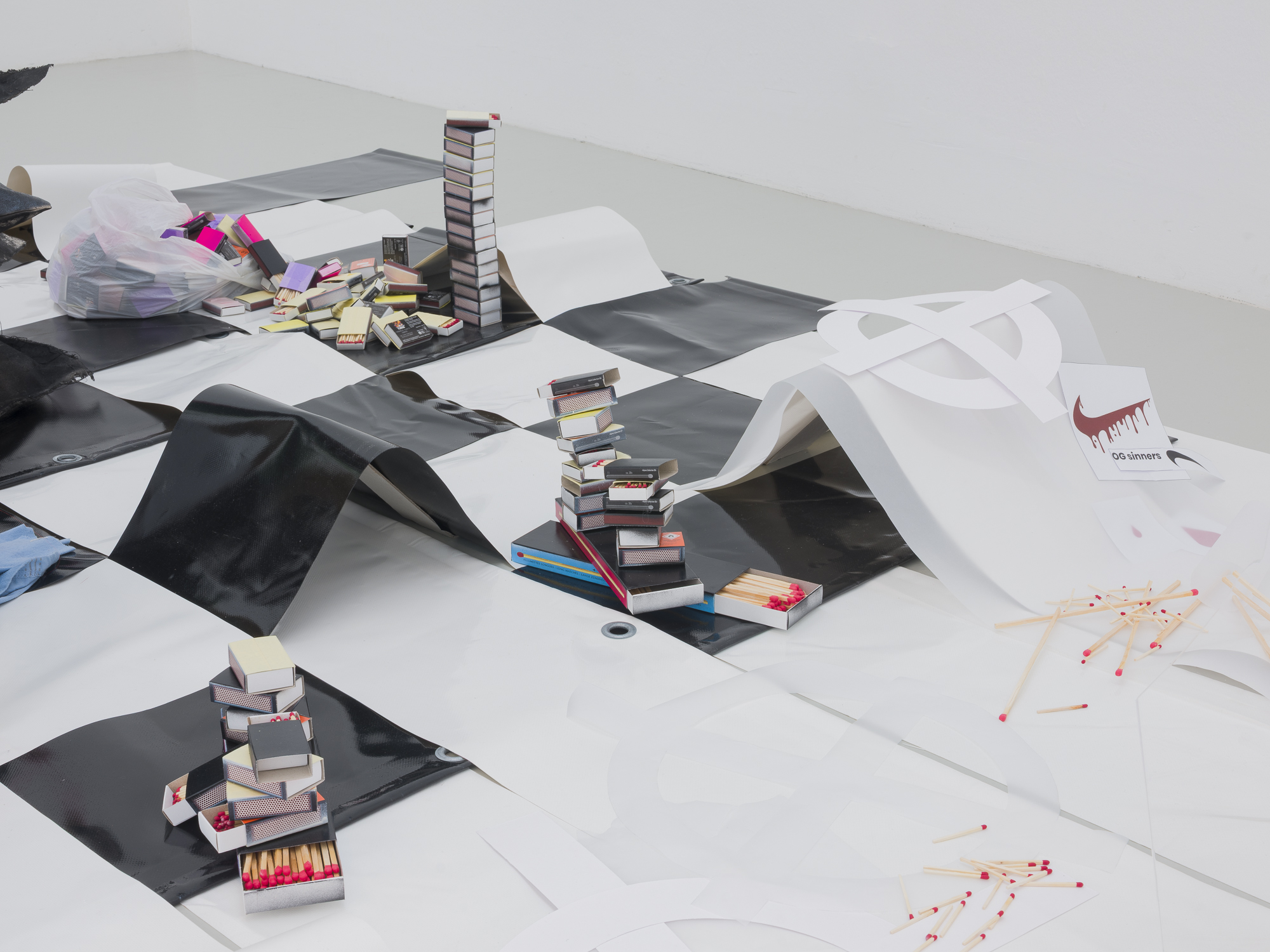
Down the rabbit hole, how to invest a world that is not yours? (2025) by Kelechi Madumere paints a portrait of white supremacy on a life-sized chessboard, where the duality of black and white reflects the asymmetry inherent to power dynamics. The work addresses the legacy of European colonialism which, built on the exploitation of resources and the theft of land, artworks, and memory, constructed a hierarchical worldview and defined the rules of the game in which the White dominates.
Displayed in a white cube, the scene presents “Mr. & Mrs. White” surrounded by white plexiglass pawns with minimal and inanimate features. Together, they form a mirror image for the viewer, a reminder of the history of our privileges, accompanied here by their darker aspects, brought visually to the forefront: one can recognise the flags of various countries involved in colonisation, as well as the Celtic cross, frequently used as an identity symbol by white supremacist groups. In this blood-tinged portrait, history resonates with the present, with the reality of systemic racism and the violence it perpetuates.
Kelechi Madumere (based in Lausanne) is a painter who tears apart her canvases in order to deconstruct and subvert their format and tradition. Through cathartic gestures, she inflicts upon her materials what she feels toward the images she depicts, oscillating between tenderness and violence. In this portrait, the white pawns face the black ones, fallen onto the cruel game board of global politics. These “wretched of the earth” – as Frantz Fanon would describe them – represent people of African descent, oppressed within a system shaped by colonial legacy. Yet these figures do not wear white masks. They reject white hegemony and, like characters of an Afrofuturist utopia, prepare to resist and overturn their condition. Carefully handcrafted by the artist, the humanized pawn-dolls are not depicted as suffering victims. Strong and empowered, they open a space where softness meets the necessity of revolt – offering an immediate soothing balm for racial wounds.
Through a deliberately brutal and insolent language, which stands in opposition to a moderated intellectualization, Kelechi Madumere recounts the violence of historical and political realities, using “trash” as a means of raising awareness. Faced with the scene’s amplified scale, we come to recognise our own implication as pawns in this very same chess game. The artistic gesture is direct, frontal – it is precisely that sharp movement that strikes the matches hidden in the pockets of the black pawns, so they may ignite.
Monica Unser
Translated from French