

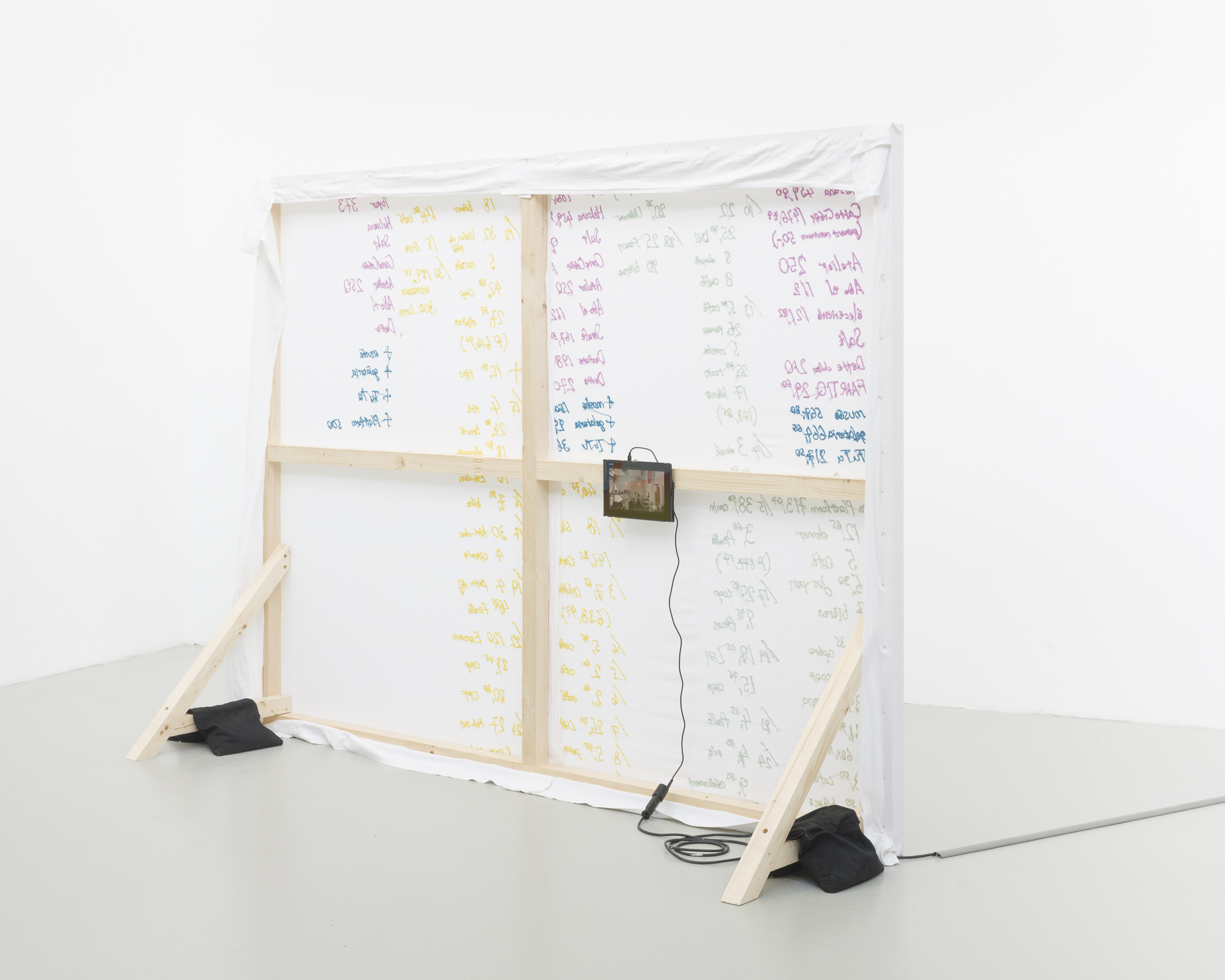
décompte mars, avril, mai, 2025
Textile, cotton thread,
hot glue, wood
200 × 270 × 100 cm
le dimanche 9 mars 11h à 12h, 2025
16:9, colour, 14'
le mercredi 2 avril 11h à 13h, 2025
16:9, colour, 24'
How do we measure the labour rooted in creative acts, and who is permitted the luxury of separating “work” from
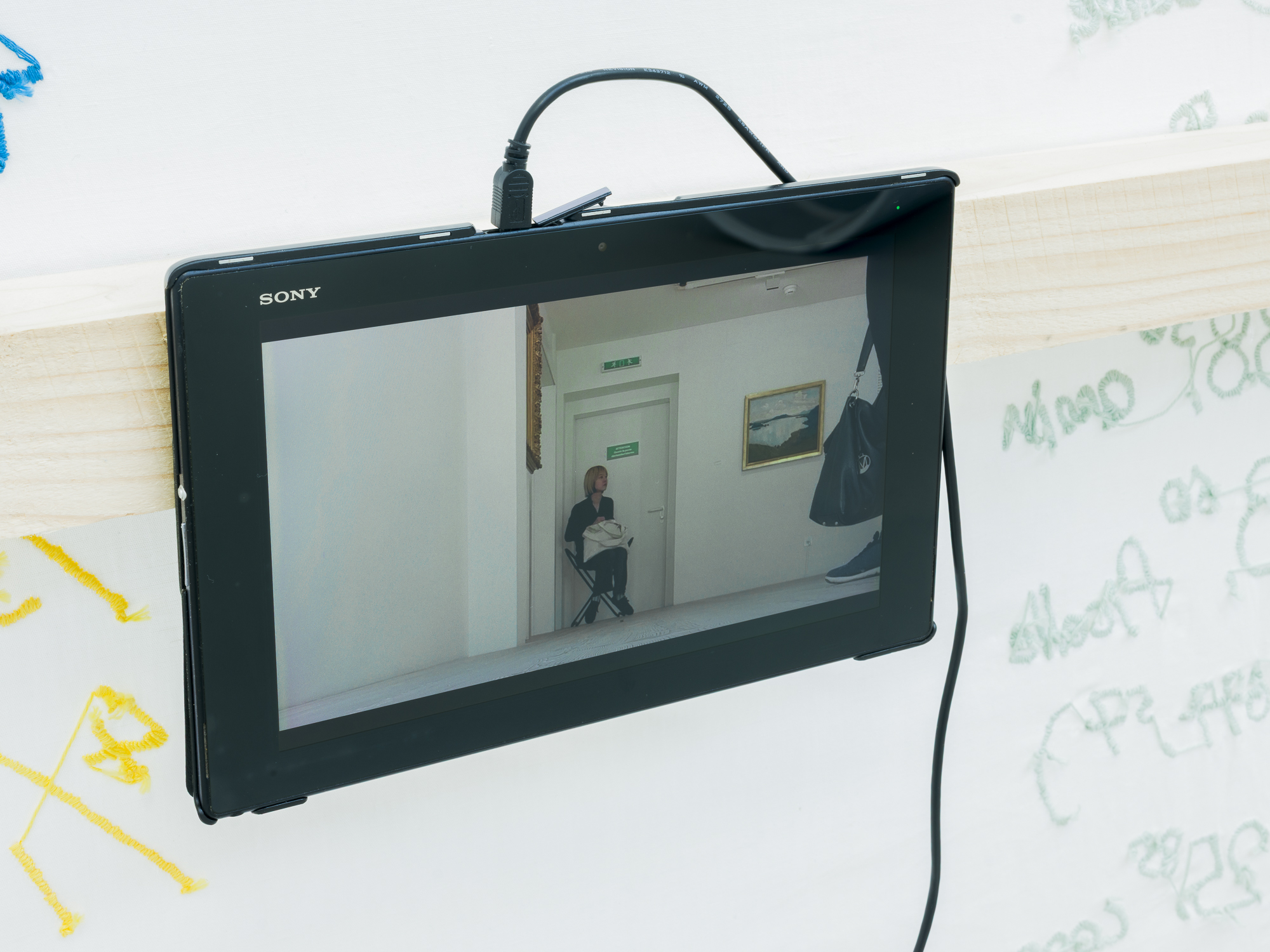
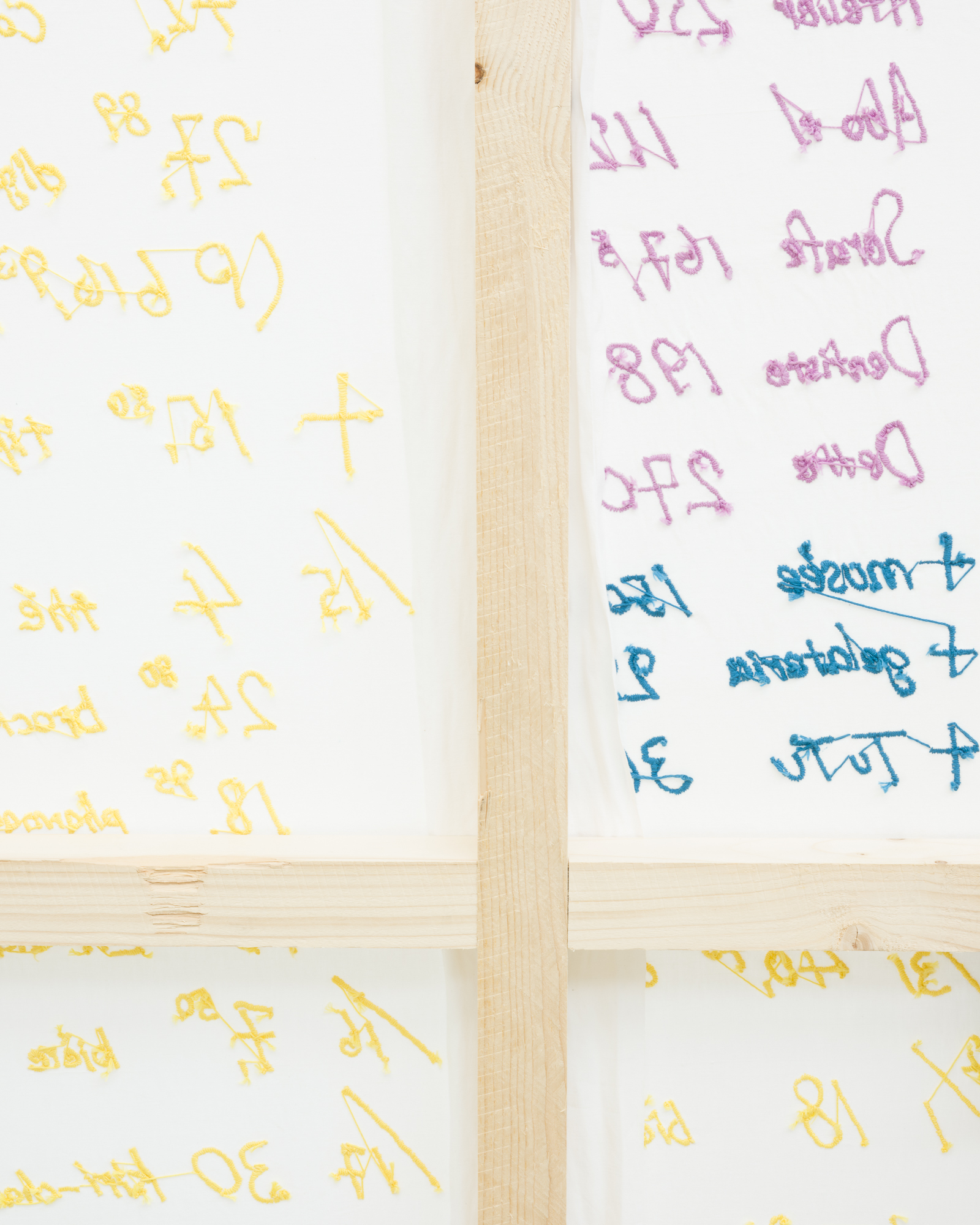
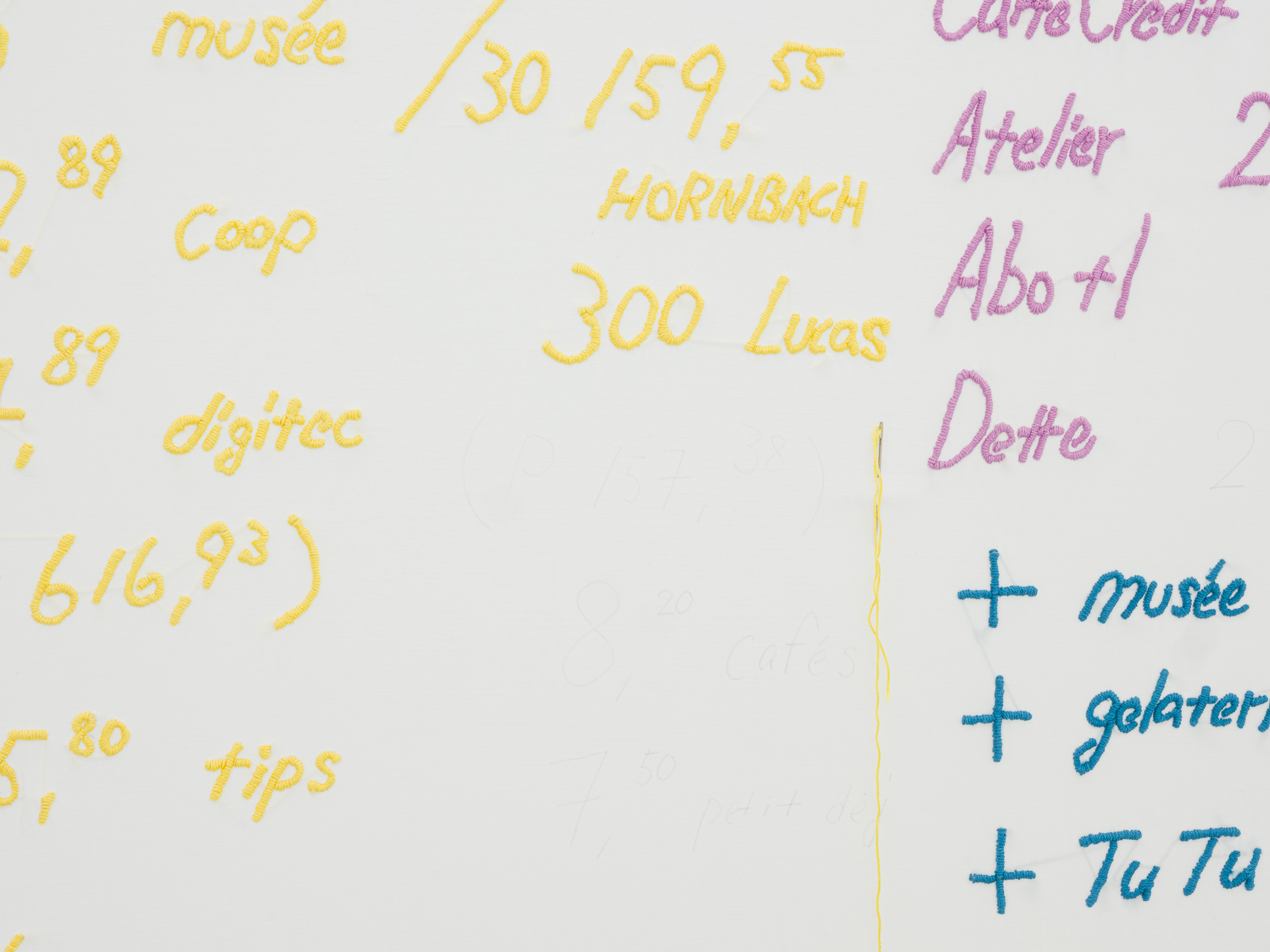
“art”? In her newest installation, Anna Kawahara (based in Lausanne) transforms these questions into a physical, almost architectural inquiry. The work titled.........../.Un moment pour me réapproprier mon autonomie (2025), neither stage nor sculpture but a quasi-choreo.graphic device, presents two interwoven realities. On the front side, a monitor loops phone footage of the artist embroidering during her paid shifts at a gelateria and museum, a performative act turning both places of work into a makeshift studio. On the rear side, that same partially fin.ished textile accurately lists her monthly expenses and income in her own handwriting. This budgeting is no mere prop: for the past decade, Kawahara has avoided conven.tional planners, instead writing and refining her financial details and calendars by hand in notebooks. Here, she embroiders those details for all to see.
This oscillation between process and product evokes the feminist interventions of the 1960s and ’70s, where craft-based practices were frequently mobilised to challenge gendered hierarchies of artistic production. Yet Kawahara’s gesture is neither nostalgic nor purely political. Embroidery here operates as a mode of living: portable enough to follow the artist across different sites, ephemeral enough to be paused and resumed in interludes. The Japanese saying..... (loosely translated to “make good use of spare time”) hovers over her labour, underscoring how quickly each moment becomes a challenged resource in late capi.talism. Michel de Certeau’s L’invention du quotidien (1980) has guided Kawahara’s thinking over the past year, espe.cially regarding autonomy and the subtle tactics individuals employ to “take back” their lives under capitalist pressures. Although her work speaks to precariousness, Kawahara does not position herself as a victim but rather declares a hopeful insistence on perseverance. Even while reveal.ing her budgetary constraints and, by extension, her reliance on multiple forms of labour, she suggests that humour, collaboration, and transparency can forge new solidarities.
Few artists readily disclose their day jobs in exhibition spaces, yet Kawahara hopes this project will encourage a dialogue with others to speak openly about the economic realities of creative work.
Visitors may perceive this work as an honest auto.biography, a personal glimpse into the balance between art-making and economic obligations. By transforming embroidery, a historically feminine craft, into a critical tool of self-reflection and resourcefulness, Kawahara offers a modest but powerful vision of how artistic production might both inhabit and transcend the capitalist structures it relies on. If .........../.Un moment pour me réap.proprier mon autonomie functions like a mirror, it does so not just for artists but for anyone who grapples with the pressures of making ends meet. The structure’s two sides are not just literal surfaces but conceptual edges, reminding us that behind every act of making lies the labour of living and neither activity can be understood in isolation.
Jack Pryce